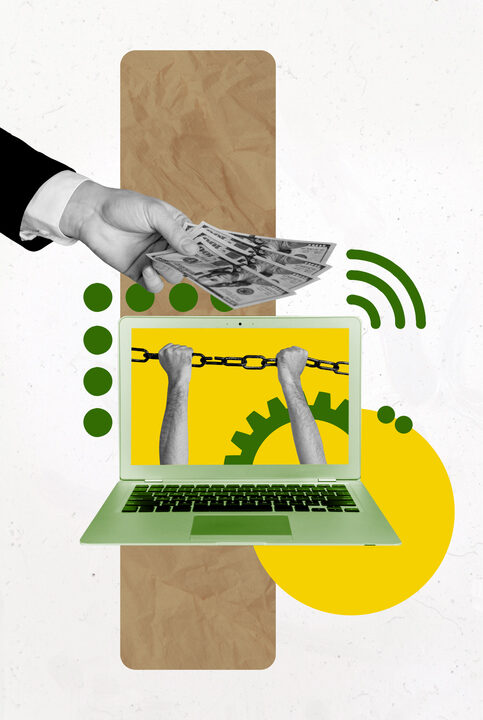
“To confront repression and depoliticization head-on, philanthropy must commit to deeply understanding and supporting the interconnected nature of global struggles.”
We are living through a compounding, interconnected catastrophe—one long sounded by Palestinian, Sudanese, Haitian, and countless Global Majority communities. Today’s mass killing, displacement, and AI-driven militarization are not isolated events but the inevitable outcomes of systems built to dominate and destroy, masked by the fragile façade of democracy and rooted in fascist violence. Yet, the tides are shifting. People across the globe are organizing, resisting, and building new systems rooted in care and liberation.
In this moment, those within and connected to philanthropy must move with political clarity and coordination, harnessing our power and influence to serve our communities with the creativity and vision they urgently need. As Nadia Ahidjo, a Pan-African feminist currently working with the Black Feminist Fund, resoundingly affirms: “Philanthropy will not save us. It is rooted in colonial legacy, capitalism, and white supremacist power—it is not the thing that will liberate us.”
Then, the question becomes: how do we, as partners and allies committed to collective liberation, boldly wield philanthropy as a tool—mobilizing it with unwavering integrity in the face of relentless repression?
We are seeing silencing and retaliation in real-time. Those who speak out—especially for Palestinian freedom—are punished. Humanitarian narratives are distorted. Repression has never been a quiet undercurrent; it is overt, systemic, and globally coordinated. The only difference is that it is now clearly visible.
Philanthropy is not outside of this; it is deeply embedded within it. Soheir Asaad, from RAWA and Funding Freedom, clarifies: “In the face of repression, progressive philanthropy too often pushes liberal narratives that obscure power dynamics, sacrificing movements for its own survival.” Evidence, such as the reporting in Repression, Retrenchment, and Resilience, highlights the many forms repression takes across the philanthropic landscape: from funders cutting or retracting funding, to policing language by forbidding terms like “genocide,” to publicly punishing small organizations—largely led by Brown and Black communities—as examples to others, to updating grant agreements with restrictive conditions that limit speech and organizing.
A key strategy fueling repression is depoliticization: a deliberate tactic that shifts attention away from the root causes of injustice and systemic change. Within philanthropy, this manifests as diverting funding toward projects deemed “safe” or temporarily appealing, rather than providing the consistent, flexible support movements need to challenge power and build transformative justice. As the foundational book, The Revolution Will Not Be Funded, explains, philanthropy “depoliticizes social justice by requiring movements to conform to donor priorities, framing radical demands in manageable, non-threatening ways that limit the possibility of systemic change.” Salmana Ahmed from Weaving Liberation further underscores, “There is a structural exclusion of strategies rooted in justice and liberatory practices.”
Philanthropy is a Marketplace of Causes
Philanthropy’s habit of trend-driven giving reduces the complex realities of people’s lives to a marketplace of causes. From racial justice to climate justice, funding shifts based on marketability when it should be directed by strategy, solidarity, and structural change. At worst, this tendency turns the sector into a ruthless Olympics of performative gestures where only the most palatable receive funding.
This disjointed approach does not simply compromise the transformative potential of resources, it also fragments movements and isolates communities. Instead of supporting the interconnected nature of global struggles, philanthropy demands we stay in our lanes—reinforcing silos and abandoning cross-movement solidarity. “Life is not about themes,” Nadia reminds us, “yet philanthropy funds themes, not people. And certainly not liberation.”
The violence of this approach is starkly reflected in the numbers. As Nadia highlights,: “Black women, girls, and gender expansive people receive just 0.1 to 0.35% of philanthropic funding—and they are expected to move mountains.” This expectation to do everything with nothing is one of the ways the system sets our movements up to fail, fueling scarcity, forcing competition, and fracturing solidarity.
The Fear Within Philanthropy
Despite its privilege and power, philanthropy is gripped by fear: fear of backlash, fear of risk, fear of proximity to liberation movements. As Nadia reflects, “We are seeing people moving with significant fear despite being in positions of privilege. Philanthropy defaults to silence because it can.”
This fear is not neutral. It is a tactic of repression. As Paulo Freire’s work reminds us, fascism doesn’t need to police everyone, it just needs us to police ourselves. But we must resist and organize. Silence and a lack of critical, collective, and organized action only deepen and perpetuate the systems that uphold oppression.
Funders Must Organize
To get money moving where it is needed, we need to be organising within and across funding institutions. That means building cross-funder solidarity, understanding who is best placed to play a particular role, and working transversally across expertise, with legal, finance, and grantmaking teams who understand how to move money with intentionality and care. “It’s not enough for program officers to talk,” explains Salmana. “We also need to imagine and build with people who grasp the legal and financial mechanics of moving money creatively, especially in challenging contexts.”
This also means funding existing mutual aid systems, land ownership models, and solidarity economies, many of which are thriving across Africa and Latin America. As Salmana urges, “We need to fund work that already exists––including intermediaries already doing the work––and give groups the flexibility and autonomy to build what they need on their terms.”
To withstand repression and build lasting change, movements need more than short-term grants, they need solidarity infrastructure. As Salmana asserts, this means funding “to dream and operationalize liberatory futures,” and “moving toward the financial autonomy of movements.” This includes investing in physical and digital spaces, community wealth-building, pooled resources, and long-term support for those living at the intersection of struggle and imagination.
“Solidarity is not just a dream,” Nadia reminds us. “It is a real, material force. It happens when we come together—in person—building and feeling each other’s power. That is what we must fund.”
Calls to action
To confront repression and depoliticization head-on, philanthropy must commit to deeply understanding and supporting the interconnected nature of global struggles. This means:
- Resource existing and emerging community-led networks, movements, and protection mechanisms—both within and across borders, including diaspora groups and informal actors. These are the frontline infrastructures that are actively transforming broken systems, advancing long-term recovery, and breaking the cycles of imposed crises. Funders must also invest in safe, accessible spaces—both physical and virtual—where people can connect, strategize, and build collective power, strengthening solidarity and resilience across movements.
- Prioritize and fund crisis response and systemic change by trusting and resourcing the leadership, knowledge, and strategies of communities at the forefront of this work. Movements grounded in lived experience are not only first responders—they are long-haul architects of justice and resilience. Reject political litmus tests and the policing of language that silence movements’ truth-telling and organizing. Instead, build coordinated sector-wide efforts to support and protect those doing this vital work.
- Invest in what works: Anti-racist, feminist, and decolonial movements led by communities impacted by injustices and working to dismantle and build new systems. Support digital justice to protect activists from surveillance and repression, provide unrestricted funding to ensure political autonomy, and invest in creative organizing tools that boost mobilization. Reject conditional, siloed funding that fragments ecosystems or censors narratives; instead, embrace holistic, intersectional approaches that reflect the interconnected nature of systemic change.
- Fund financial autonomy by resourcing the operational backbone of digital and physical spaces, pooled assets, creative financial and investment mechanisms for community wealth-building, and the infrastructure to operationalize liberatory futures. Prioritize providing funding upfront as unrestricted grants rather than delayed payments or piecemeal disbursements, and streamline the flow of all resources to ensure movements have immediate, flexible access to the capital. Foundations must dismantle traditional gatekeeping, radically shifting power by returning resources directly to communities for autonomous management and control.
Read the research and evidence behind the calls to action:
- Repression, Retrenchment, and Resilience: Philanthropy and support for Palestinian liberation after a year of genocide
- Black Feminists Movements and Crises
- Where is the money for Black feminist movements?