Featured Story
Learning from COINTELPRO’s Survivors: Accountability and Repair
For Watani Stiner, accountability for tragedy isn’t about who pulled the trigger, but how he contributed to a culture that made it possible. “Stiner,” a San Quentin Prison correctional officer yelled. “You’ve got mail.” Nearly fifty years after COINTELPRO tore...

As If It Could Be Otherwise
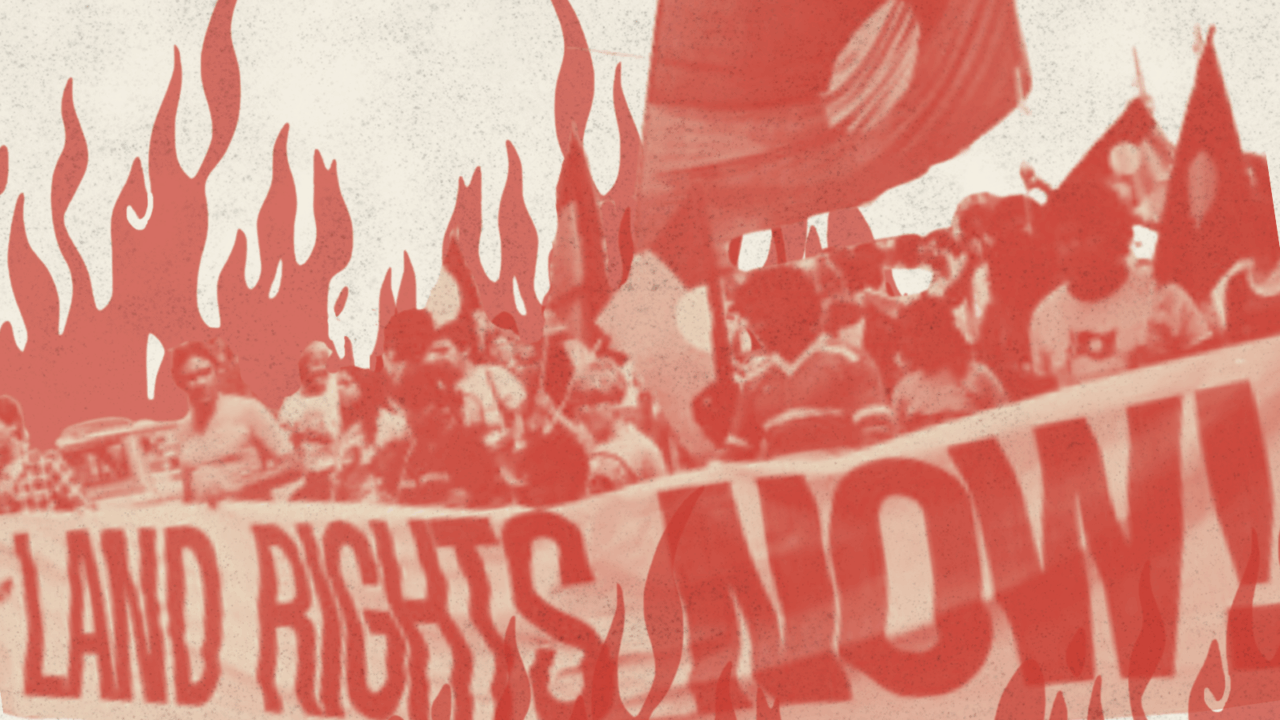
The Legacy of Displacement: Reclaiming Borders & Solidarity across North America
The family policing system and the colonial legacy of the pass system, boarding schools, slave patrols, and immigration policies. Indigenous, Black, and other communities of color across North America know all too well how quickly civil rights and community safety...
-
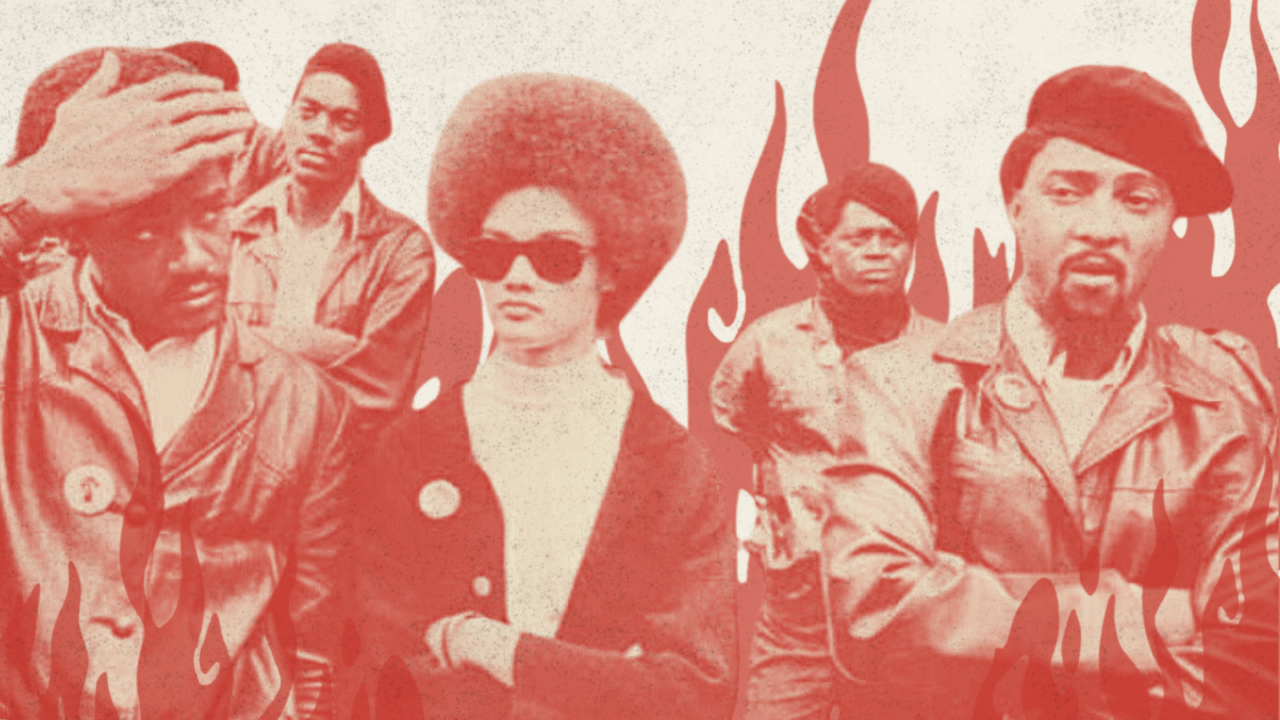
Tending to Liberation
The American Dream was built on stolen land and enslaved labor, so true freedom means rejecting it and building a Liberation Economy rooted in repair and abundance. You and I will always sit at a crossroads, surveying our options at...
-
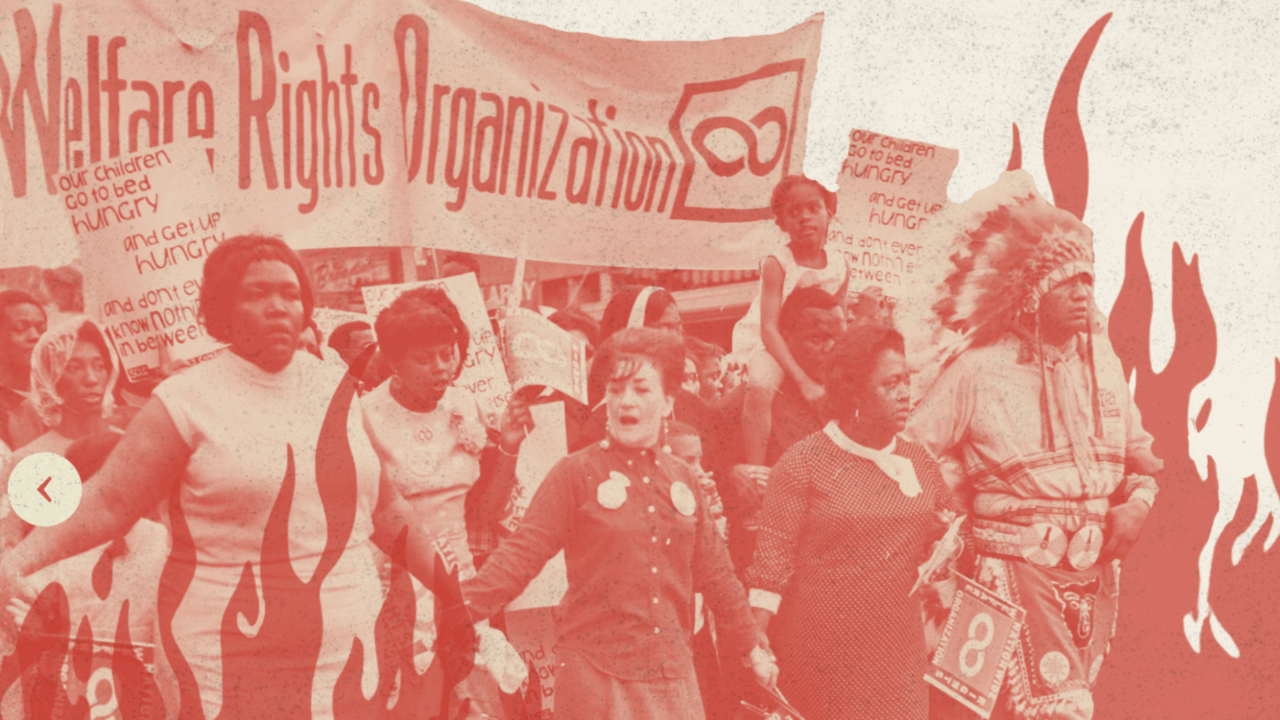
The Right To Wealth
Trevor Smith in conversation with Anne Price and Jhumpa Bhattacharya of The Maven Collaborative. The racial wealth gap is not a product of individual behavior but of policy design. Because of this, we must create new frameworks for wealth, inheritance,...
-
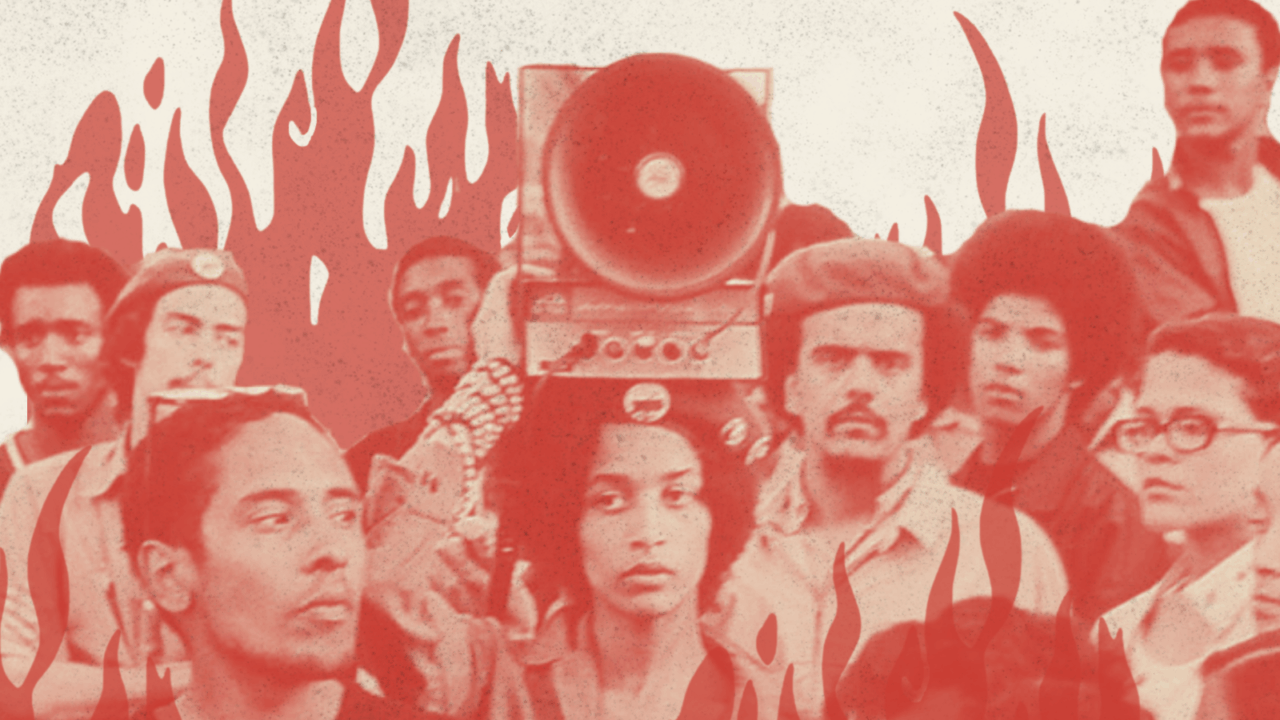
A New Politics of Togetherness: Rebuilding the Sacred Canopy
If we’re going to work to bring diverse groups of people into conversation and ultimately solidarity, we will need an updated politics of togetherness capable of bringing nuance to intersectionality. Trevor Smith in conversation with Amara Enyia and Scot Nakagawa...
-
Reclaiming Power as a Practice to Get Free
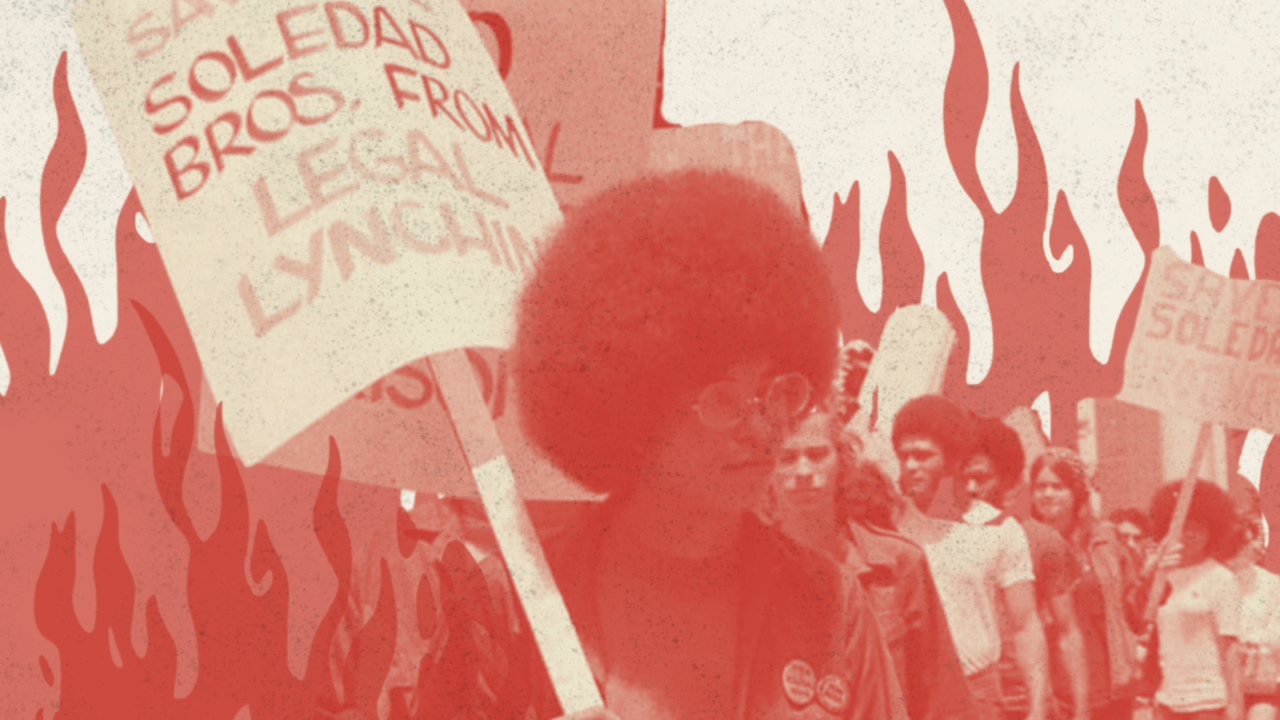
The abolitionist movement transformed America from a slaveholders’ republic into a multiracial democracy in just decades, proving that organized people are the engine of real change. As America turns 250, social movements can look back on where we’ve been to...
-
Braided Movements: Black & Indigenous Perspectives on Reclaiming Land
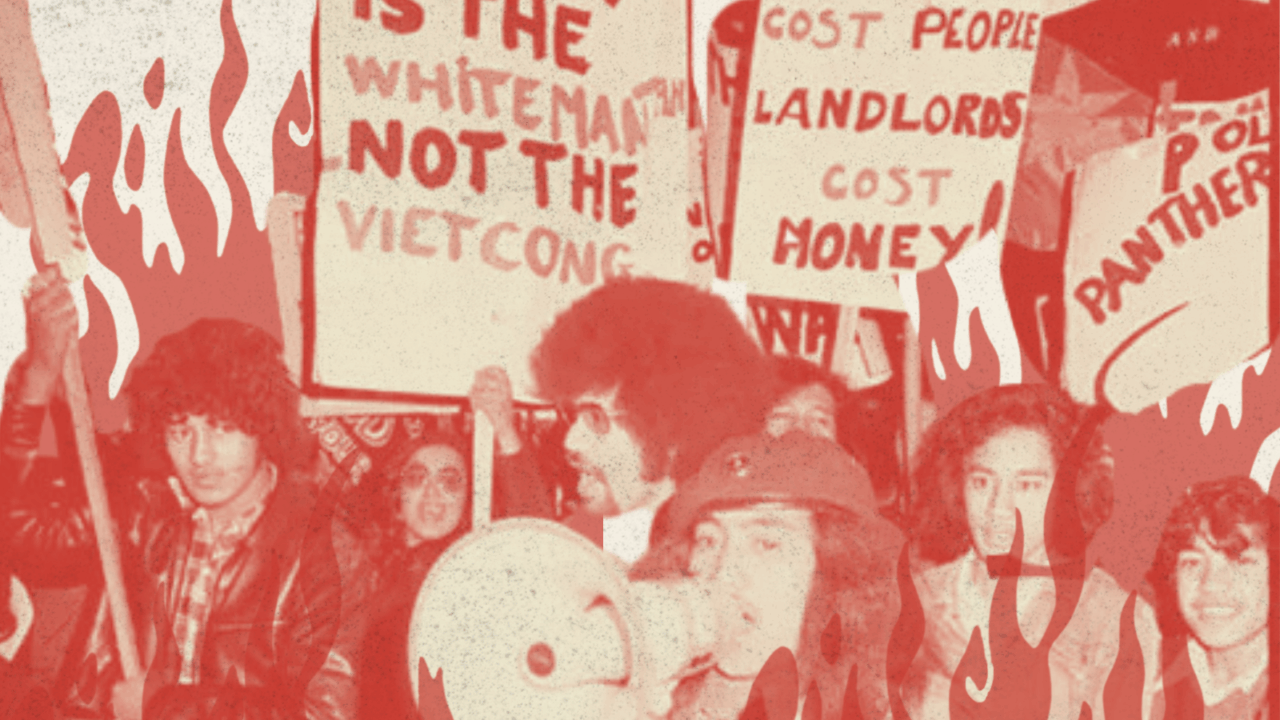
In a country where land has historically been central to wealth and power-building, we must carefully consider how we want to work together towards land reclamation. Kailea Loften in conversation with Nick Tilsen and Brea Baker At the start of...
-
Democracy and Decolonization: The Poor People’s Campaign and the Black and Indigenous Fight for Mino Bimaadiziwin
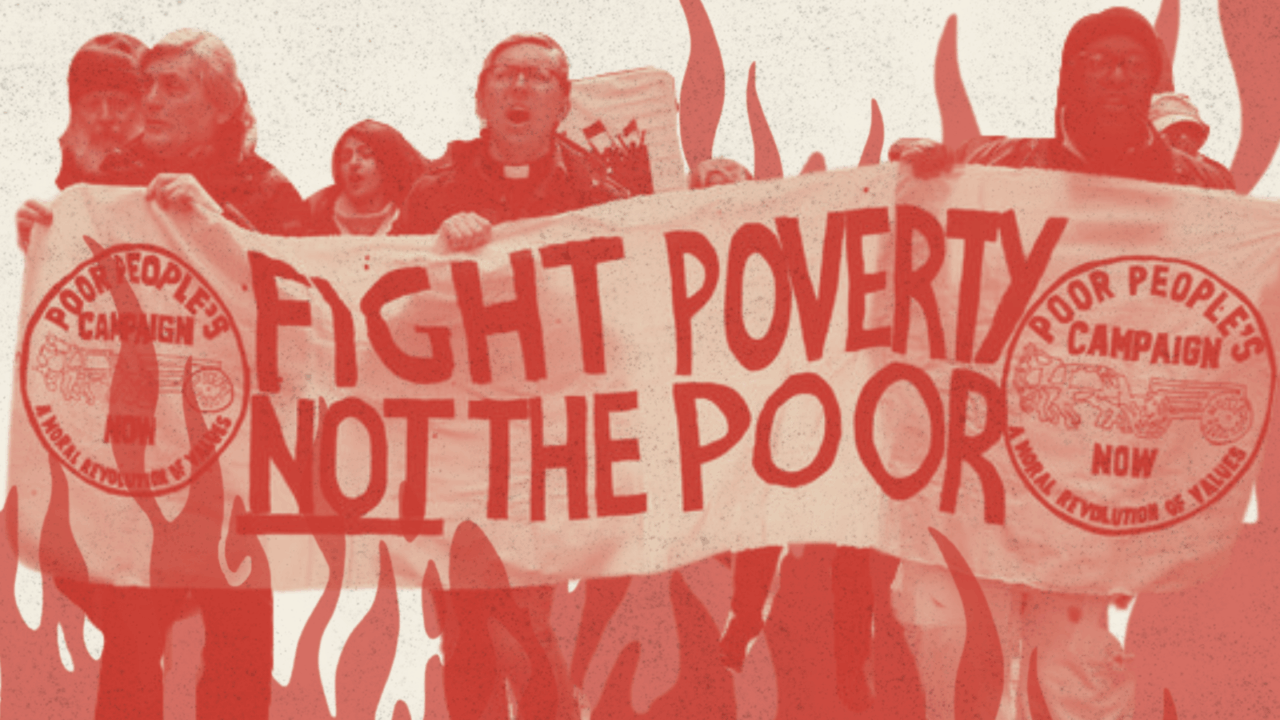
We are living in fascist times, which means we must remember history to help us understand the possibilities of our futures. Do we want to subjugate ourselves to the tyranny of a dictatorial leader? Or do we want to struggle...
-
Repair in Practice: On Wealth Redistribution
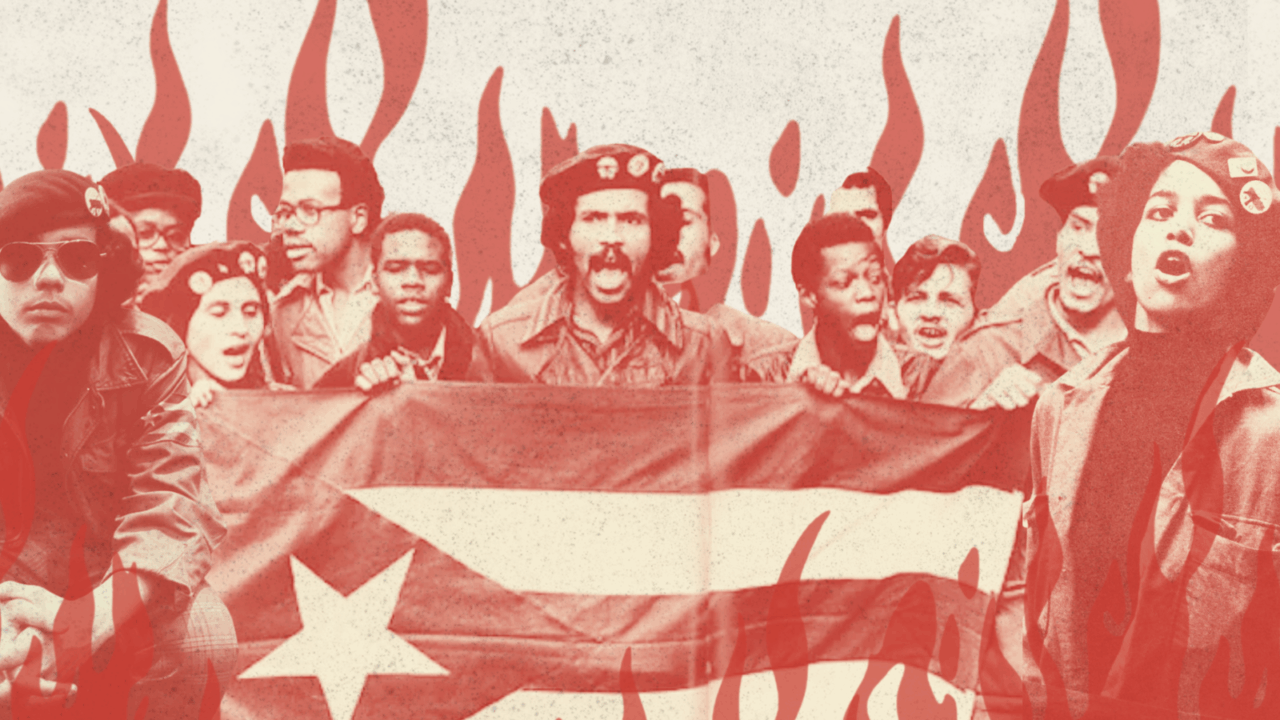
Wealth redistribution, as a relational practice rooted in accountability, has the potential to spiritually transform a person, as shared here by redistribution organizers Brittany Koteles and Morgan Curtis. Koteles, Executive Director of Land Justice Futures, an organization that supports Catholic...
-
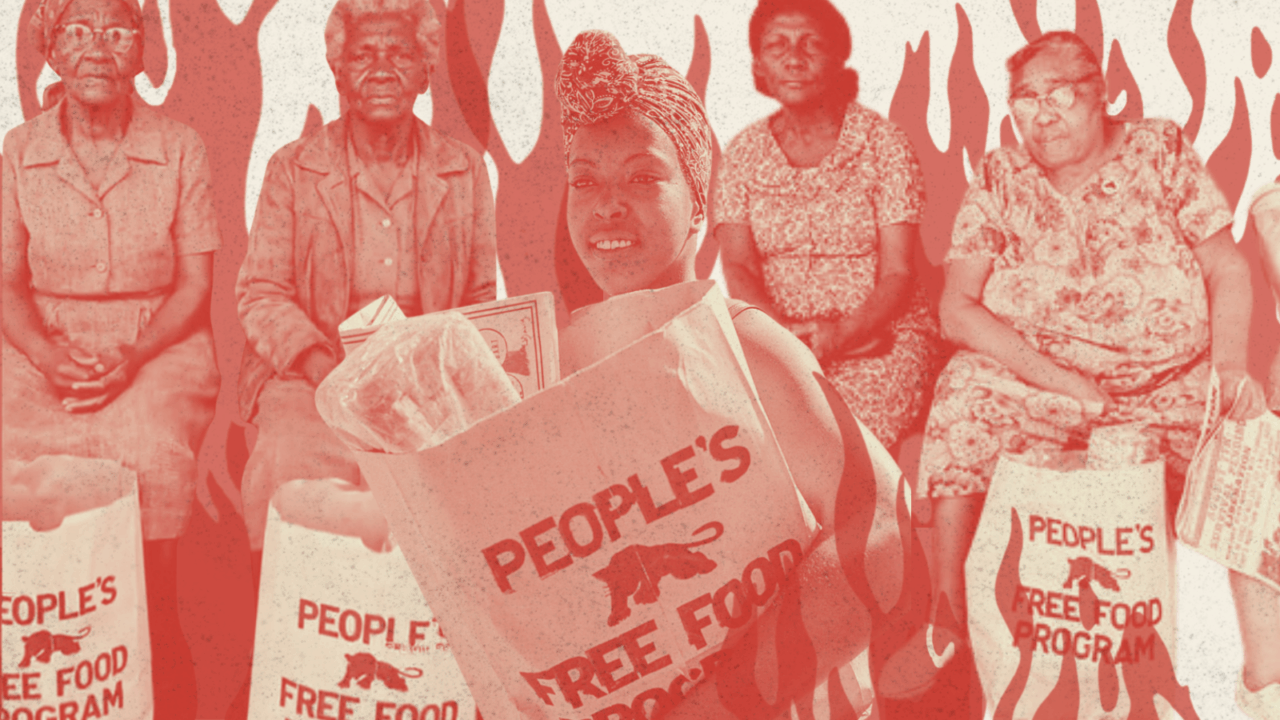
Beyond Democracy, Everyone Eats
In this conversation, Claire Maracle, Executive Director of Words of the People, and Baratunde Thurston, storyteller and author of How to Be Black, excavate the origins of American democracy to expand and reshape our political imagination. It turns out we’ve...
-
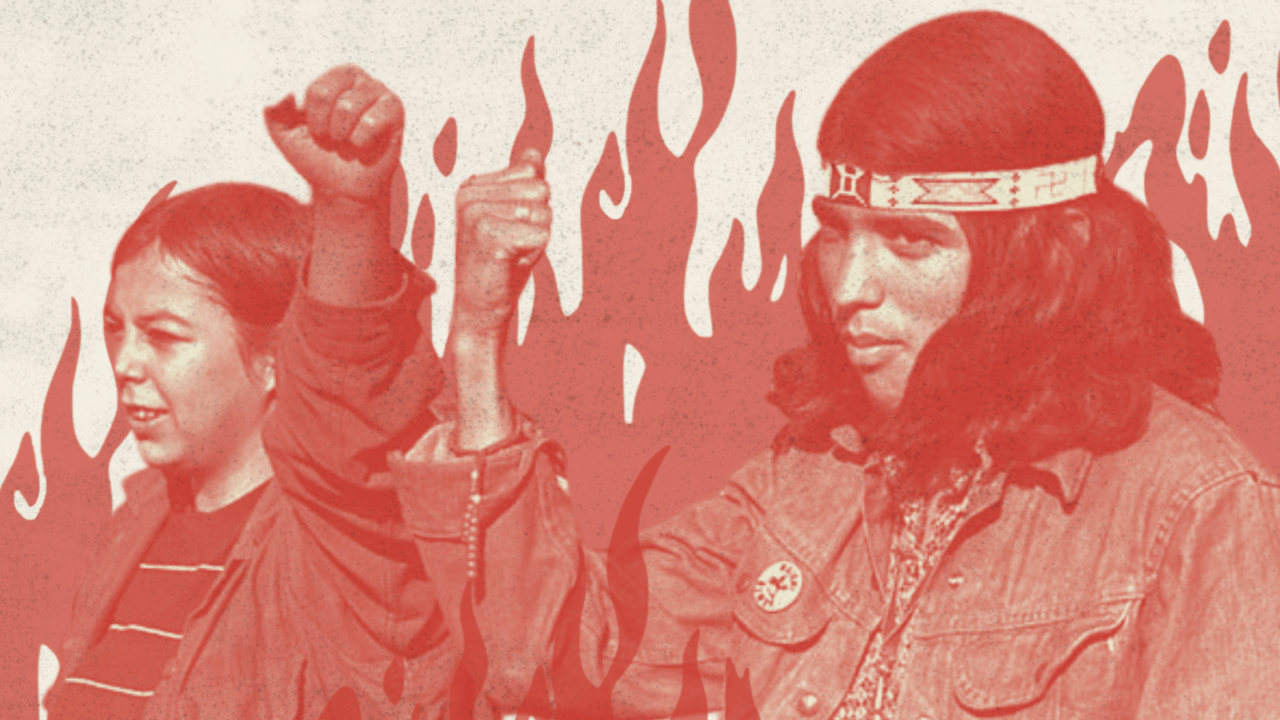
Organizing as Ancestral Practice: Building Infrastructure for the Next Era of Movements
All social movements need infrastructure capable of sustaining across multi-generational fights. But how do we build this infrastructure and ensure that we lower the cost of onboarding new people into our movements so they can grow? As Judith LeBlanc, Executive...
Corporate Power
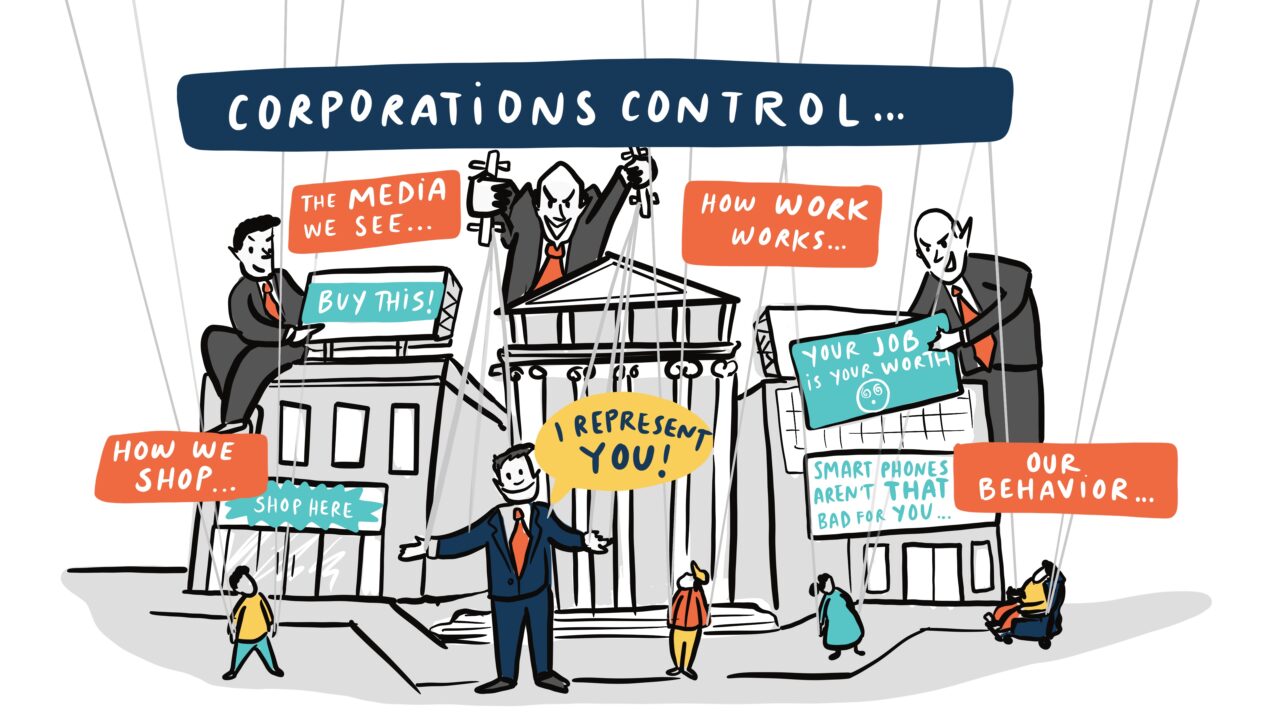
The Corporate Power of It All
Building on our efforts to curb corporate power, Liberation in a Generation recently organized a special edition of The Forge—an online magazine focused on organizing and strategy—centered on reining in the rising influence of Big Business on our lives, communities and economy. Bringing together a wide range of grassroots leaders and organizers, this edition offers firsthand perspectives and collective strategies for weakening corporate power, reminding us that these challenges are part of a long arc and that we all hold power and potential, collectively, to rein in runaway corporate power.
-
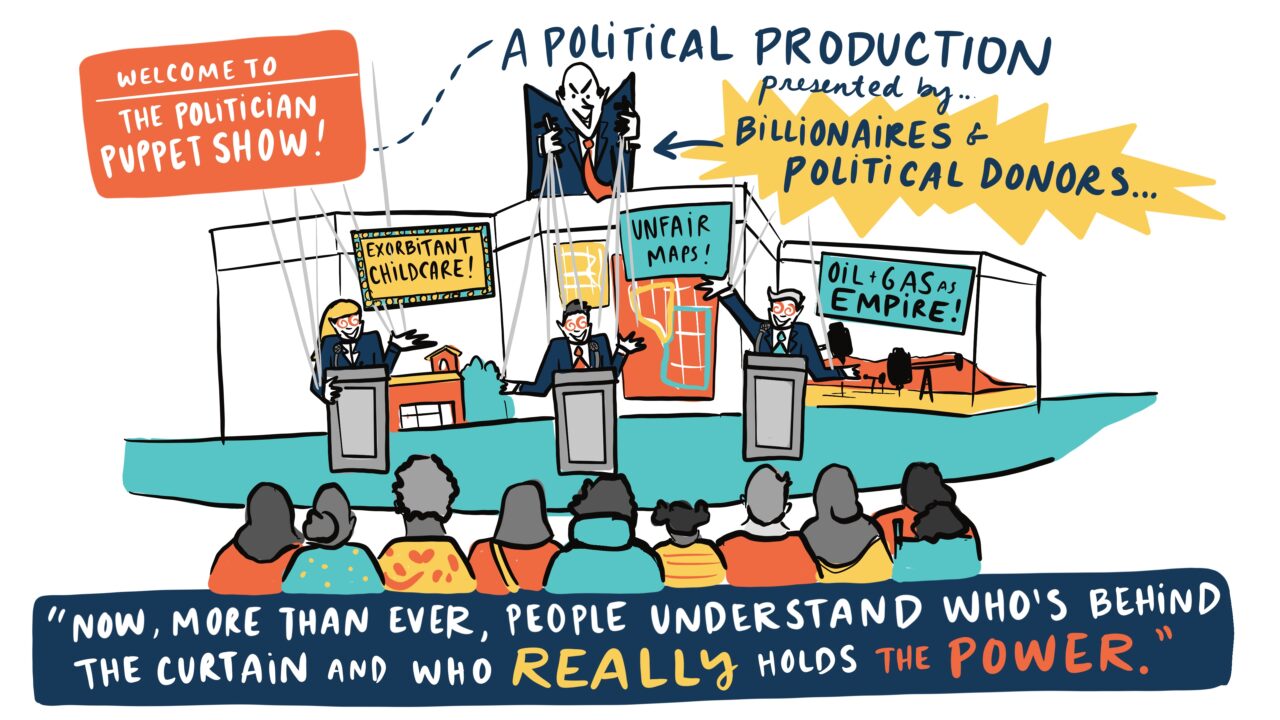
The Contours of Corporate Power
Corporate power, its reach, and impacts are felt in all kinds of ways in our daily lives, but often its presence isn’t clearly visible or easy to spot. Our guest, Corrine Hendrickson from Wisconsin Early Childhood Action Needed (WECAN) and Sofia Lopez from Texas Organizing Project (TOP), discuss the visible and invisible ways corporate power harms communities.
-
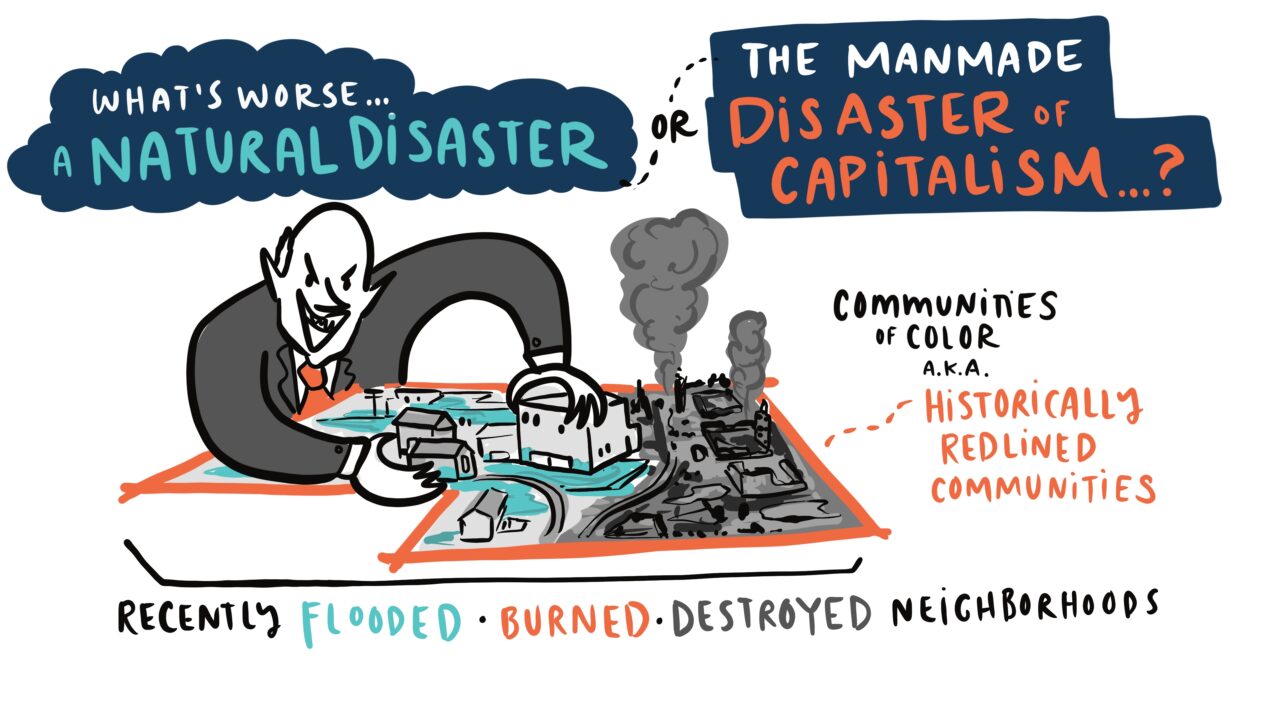
When Disaster Strikes: Housing Inequality and The Rising Threat of Disaster Capitalism
Fueled by massive resources, corporate power is reshaping vast parts of our housing market, and with it, many of the neighborhoods that communities across the country have long called home. However, as our communities face more frequent once-in-a-generation climate events, corporate investors are also exploiting these disasters to acquire more of our homes. In this conversation, Iris Craige from Strategic Actions for a Just Economy (SAJE), Audrey Aradanas from Miami Homes for All, and Stella Adams from Blueprint North Carolina discuss the role of corporate power in housing and specifically after natural disasters.
-
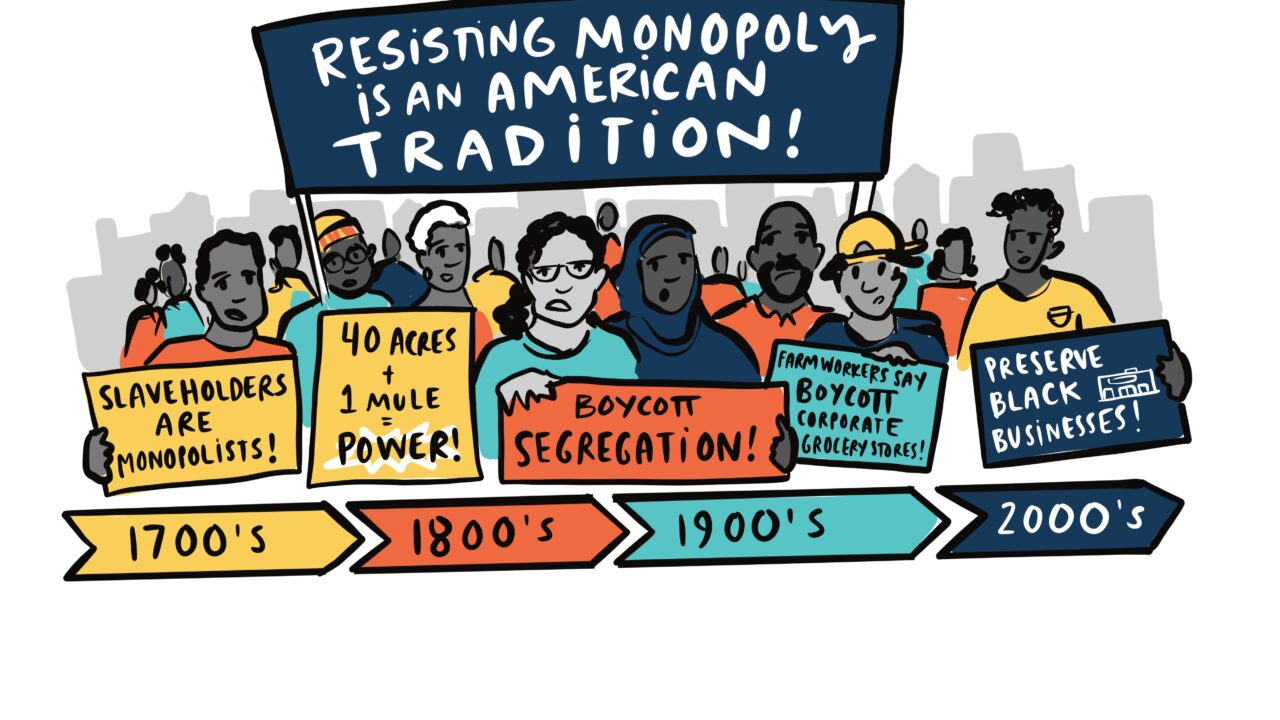
How We Beat Corporate Power Before
The concentration of wealth and power we face today is on a scale once unimaginable to many. Yet, the presence of corporate power in our lives is not new. Over the course of our history, a wide range of communities have come together to fight back and reclaim the economy and the levers of power in service of everyday communities. Our guests, Ron Knox from the Institute for Local Self-Reliance (ILSR) and Candace Milner from Demos, discuss the history of reining in corporate power and the people who led those fights.
-
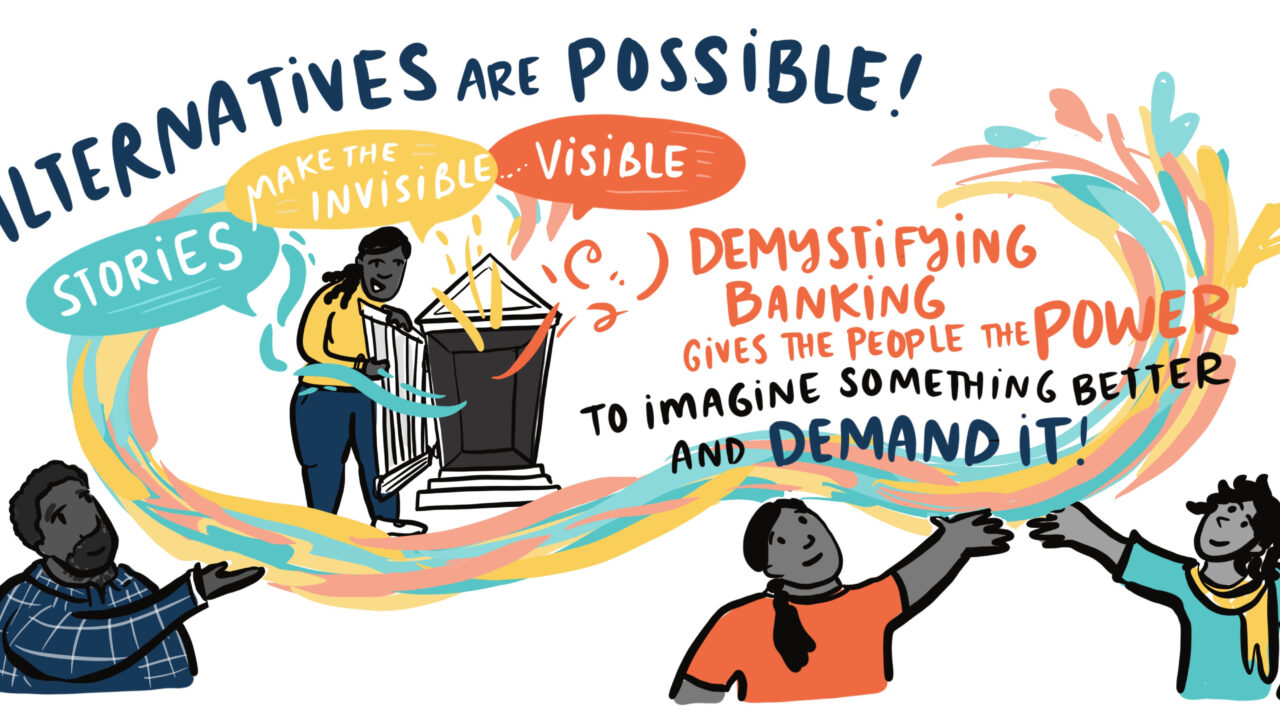
Lessons From Fights For Public Control of Banking and Broadband Infrastructure
Looking around our economy, many of us know that the fight to rein in corporate power isn’t limited to a few very powerful tech companies. In this conversation, Trinity Tran from the California Public Banking Alliance (CPBA) and Sean Gonsalves from ILSR discuss how communities are successfully organizing for public banking and public broadband today.
-
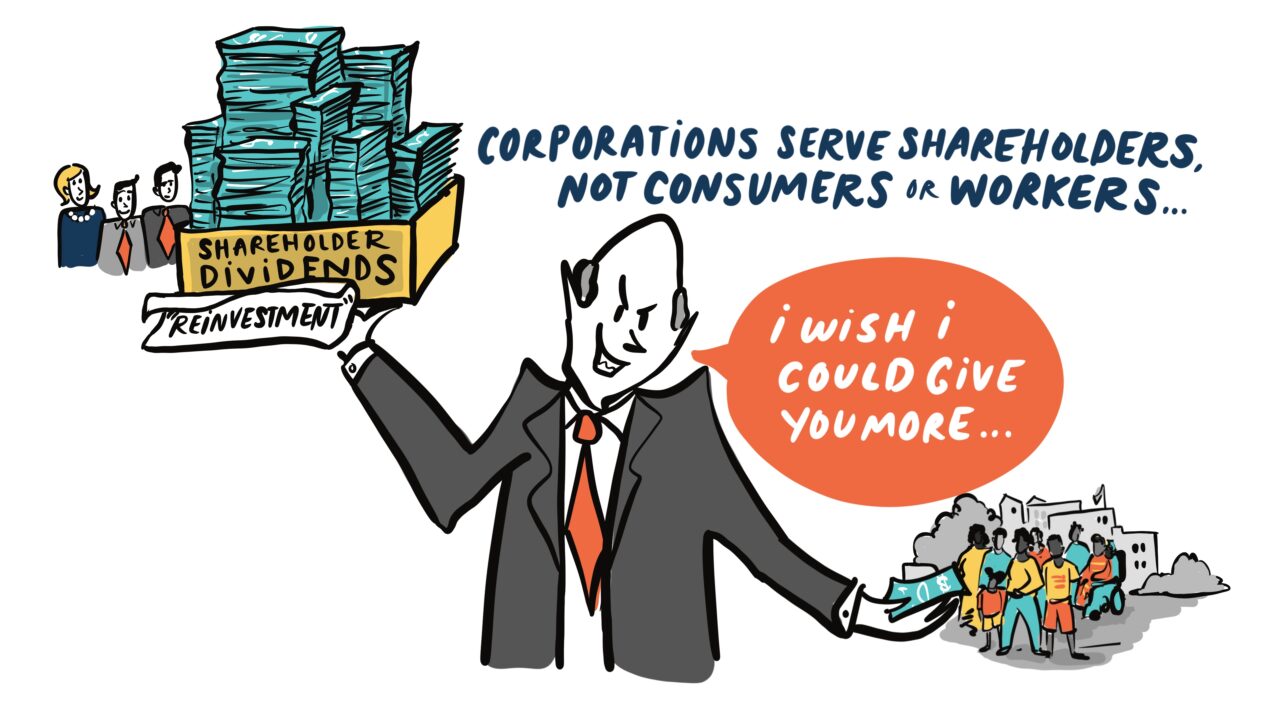
How Our Money Feeds Corporate Power
All too often, corporate power is measured largely by the profits and balance sheets of Big Business. But the story of how these corporations and those that own and control them make this money isn’t simply about whatever tangible goods and services they offer; it's a story of how corporations have managed to deeply embed themselves in our economy to extract as much of our resources as possible. Our guest, Lenore Palladino from the University of Massachusetts Amherst and Sue Holmberg from the Institute for Local Self-Reliance, discuss how our public and private money is enriching the wealthy at the expense of small businesses, workers, and consumers.
-
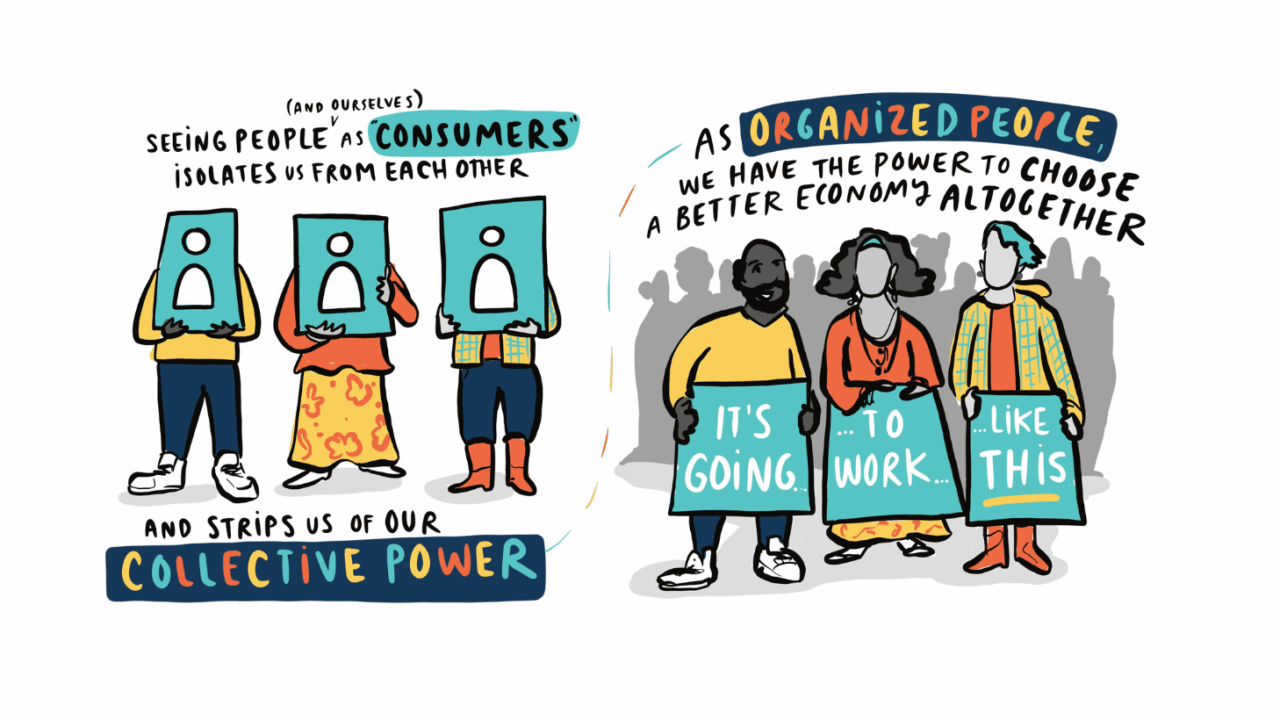
The Opposite Of Corporate Power Is People Power
Although we’ve seen meaningful progress in recent years to rein in runaway corporate power, a lack of a strong, grassroots-baked base has meant those actions haven’t been able to be sustained for long. In this conversation, LiJia Gong, formerly with Local Progress, and Ryan Gerety from Athena Coalition, focus on the need for bold, accessible, and relevant policy solutions that center everyday people, name corporate harms, and move beyond the limits of elite-driven anti-monopoly strategies.
-
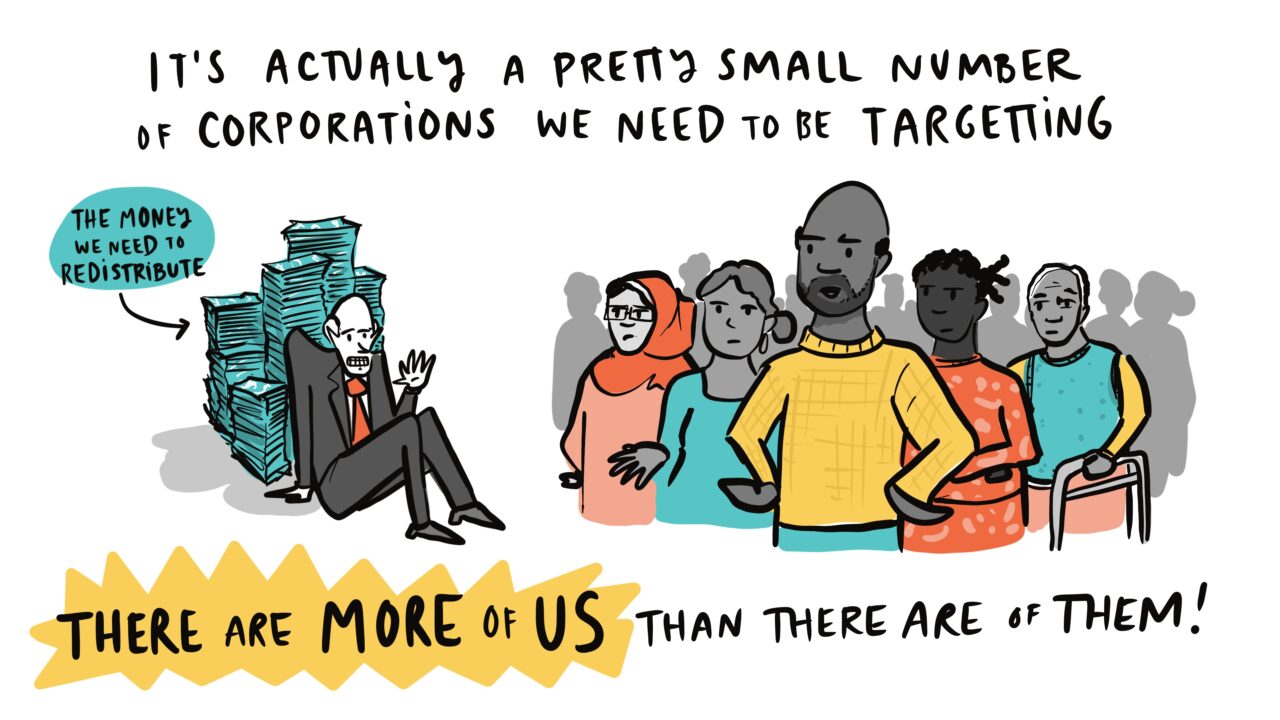
Inviting Communities To Take On Corporate Power Structures
Although people are intimately aware of the impact that corporate power has on their families and communities, and know what is needed to curb it, many find it difficult to overcome skepticism about creating change through the political process. Our guests, Dania Rajendra, a writer and organizing and founding director of the Athena Coalition, and Andrea Dehlendorf, co-founder of United for Respect, discuss ways we can meaningfully invite, engage, and empower people to join and lead the fight to curb corporate power.
Latest Stories
-
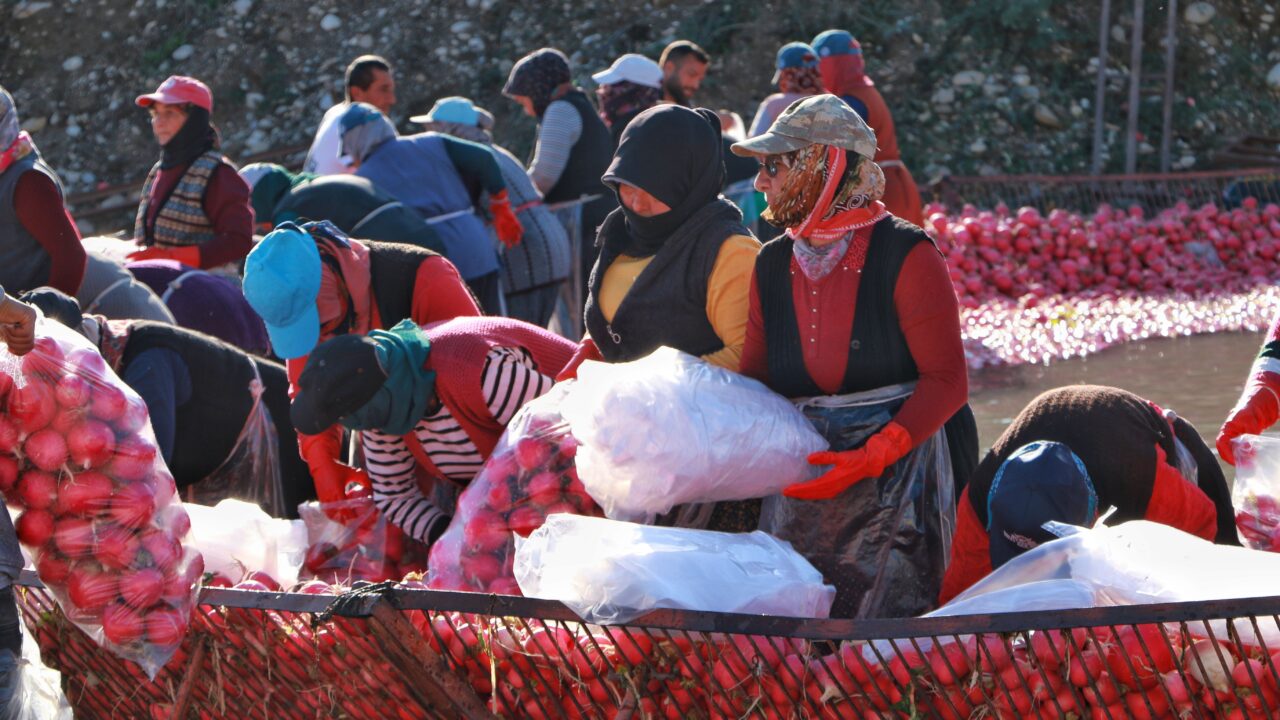
A Legacy of Sexism is Holding Back Our Movements. Here’s How to Move Forward.
Cesar Chavez’s sexual assaults were horrific. Sexism in organizing persists and requires the attention of leaders. I’ll present stories and analysis of this sexism from nearly 200 organizers we spoke with at The Women’s Organizing Network. The Women’s Organizing Network...
-
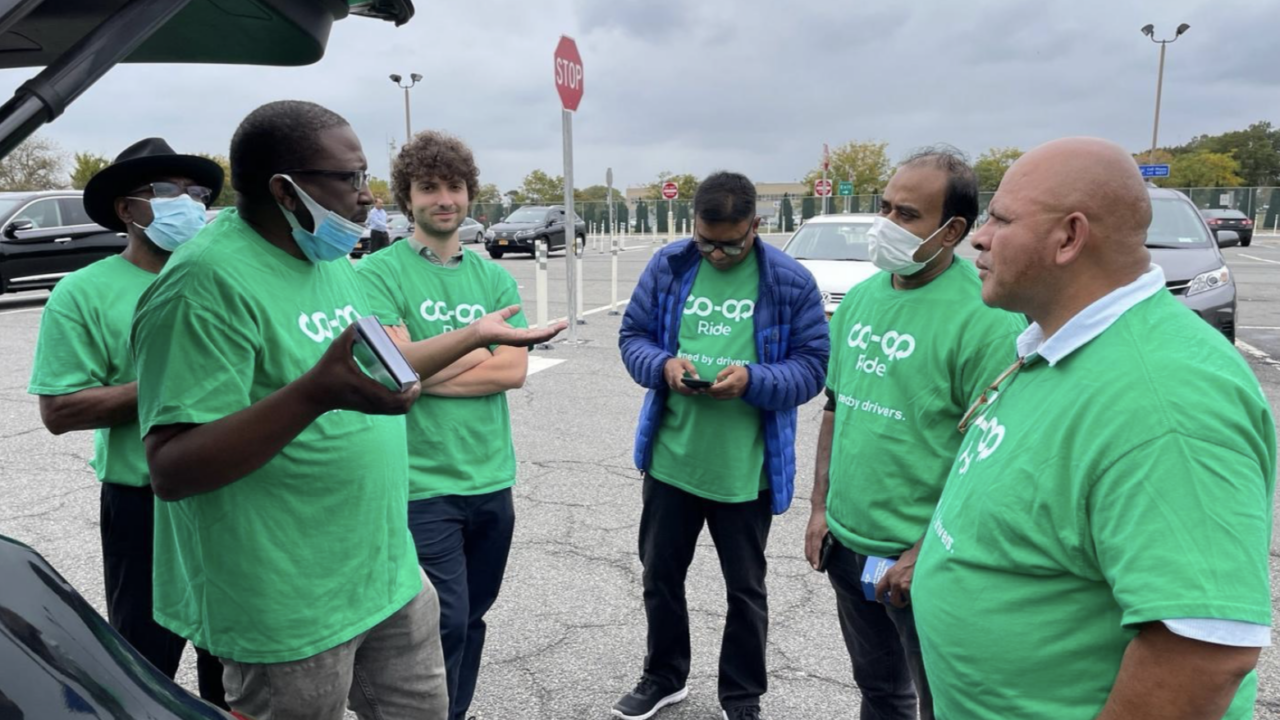
The Drivers Cooperative II : Unions Can Raise the Floor, Co-Ops Can Raise the Ceiling
Part 2 of The Drivers Cooperative Series. The three installments of this series follow the first five years experience of The Drivers Cooperative. In every sector of the capitalist economy, firms have developed business practices that routinize the extraction of...
-
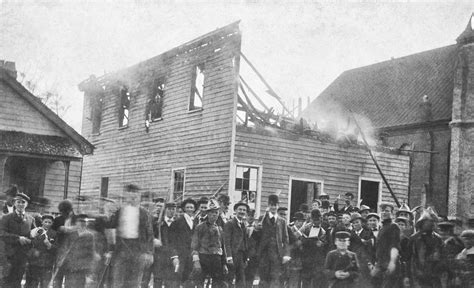
Invisible Power, Exploited Disinformation: The Architecture of Manufactured Consent
Part 3: Invisible Power, Exploited Disinformation: The Architecture of Manufactured Consent, we explore this psychological terrain. We examine how the architects of the 1898 coup employed media syndicates, fabricated crises, and stereotypical tropes to manufacture the public panic required to...
-
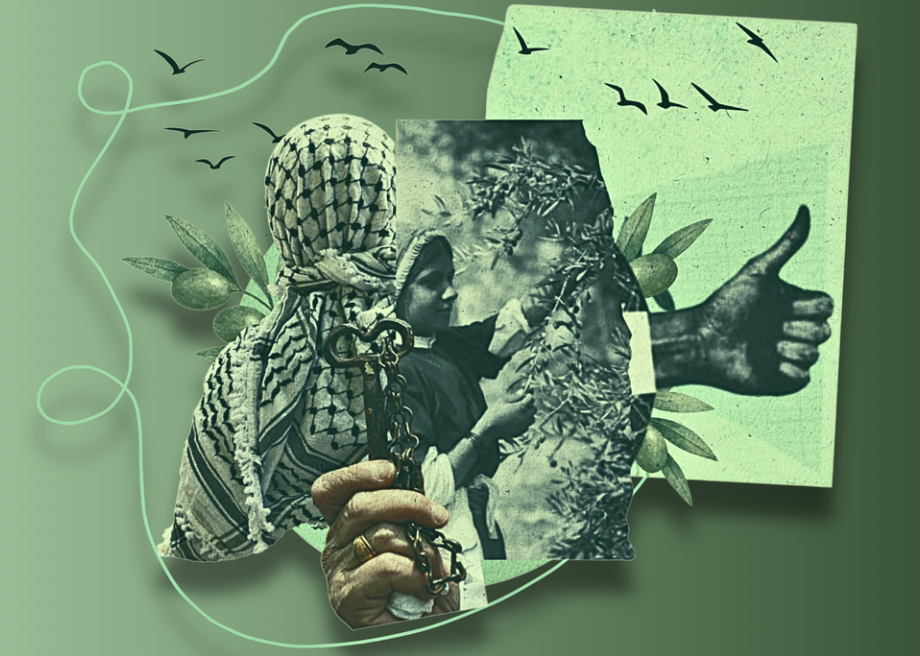
Solidarity over Silos: What Palestine Teaches Us About Organizing Philanthropy
Two funder organizers share four action steps—drawn from Funders4Palestine’s new Raise the Bar tool—that philanthropy can take to strengthen their commitment to social movements and move away from practices that harm and limit grassroots organizations. Co-published with Nonprofit Quarterly. What...
-
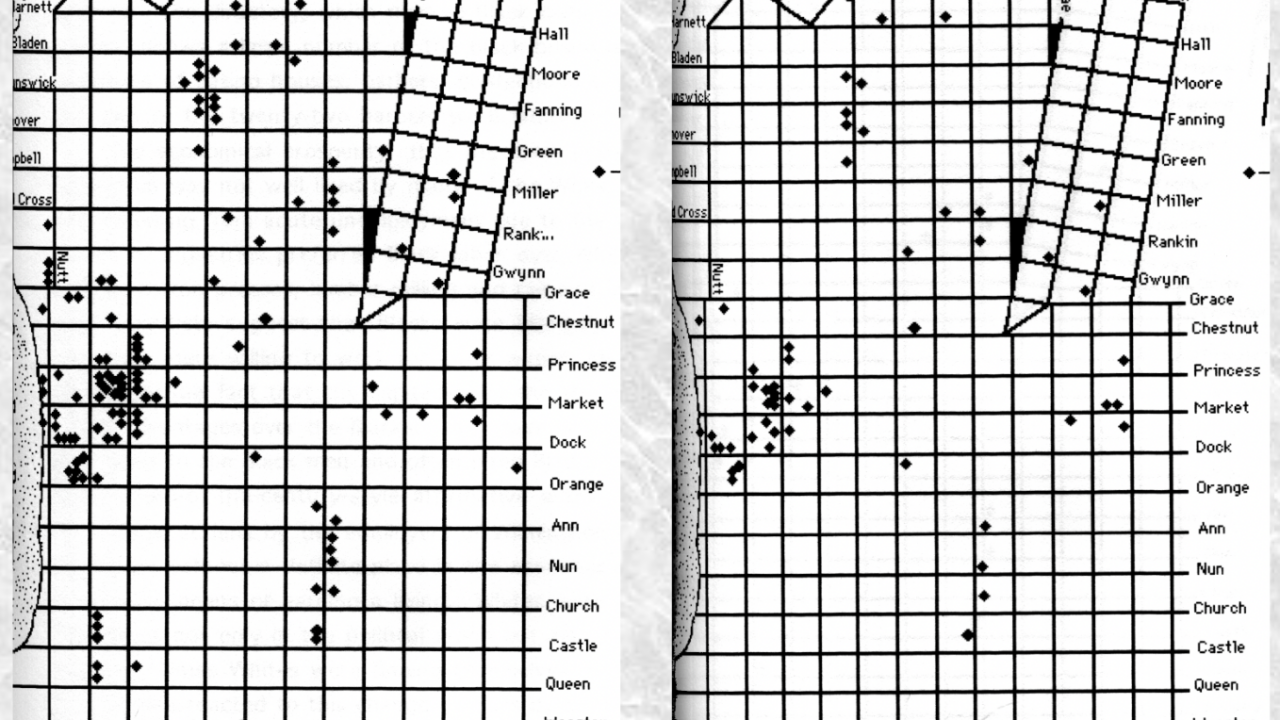
Black businesses in Wilmington, 1897 (LEFT) Less than 40% of those still remained, 1900 (RIGHT) Hidden Power, Codified Inequality: From Jim Crow to Project 2025
How did the architects of Wilmington’s coup moved seamlessly from physical to structural violence? Their use of hidden power exposes how modern institutional frameworks like Project 2025 echo historical legal blueprints to hoard power for a privileged elite. Physical violence...
-
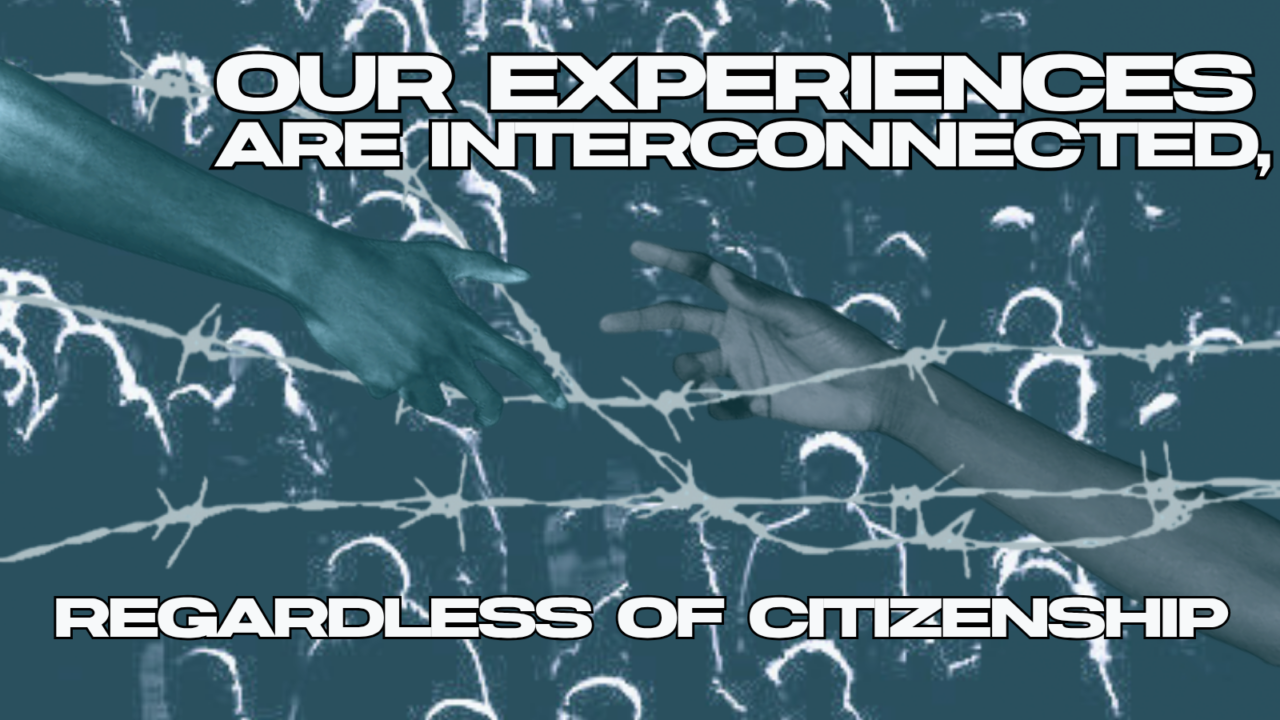
Our Experiences are Interconnected, Regardless of Citizenship
A Conversation About Blackness and Criminalization with Black Alliance for Just Immigration The politics of divide and conquer are as present as ever, and so how do we gather all that has happened already and take that technology that we...
-
Our Experiences are Interconnected, Regardless of Citizenship
A Conversation About Blackness and Criminalization with Black Alliance for Just Immigration The politics of divide and conquer are as present as ever, and so how do we gather all that has happened already and take that technology that we...
-

Materialization: A Reflection on Five Years of Worker Ownership at The Drivers Cooperative
The three installments of this series follow the first five years experience of The Drivers Cooperative. They will draw out insights that can be applied by other activists in our context today, where the left increasingly wields political power, but...
-
Visible Power, Invisible Rights: Why Earning Progress Is Not Enough to Keep It
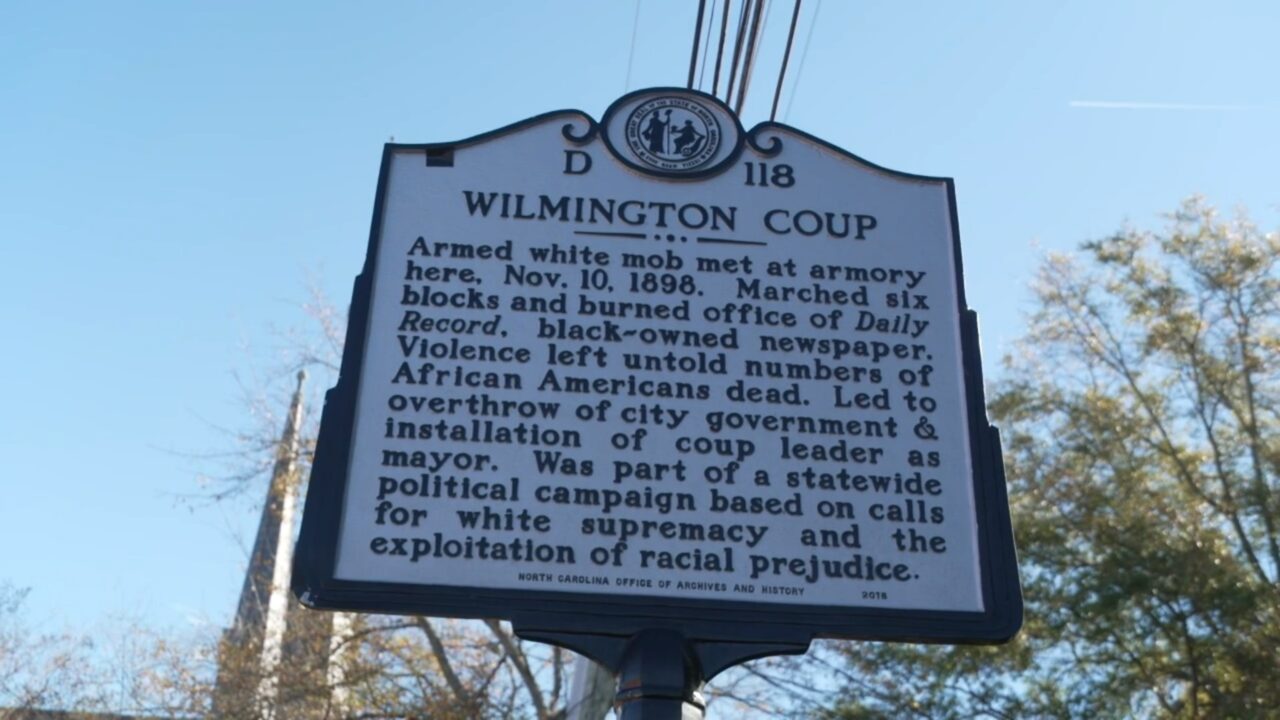
We examine how the 1898 Wilmington coup exposed the fatal illusion that electoral victories alone can secure lasting power when the ruling class retains control over violence, wealth, and the institutions that enforce both. As the United States marks its...
-
How Domestic Workers built POWER in Philadelphia
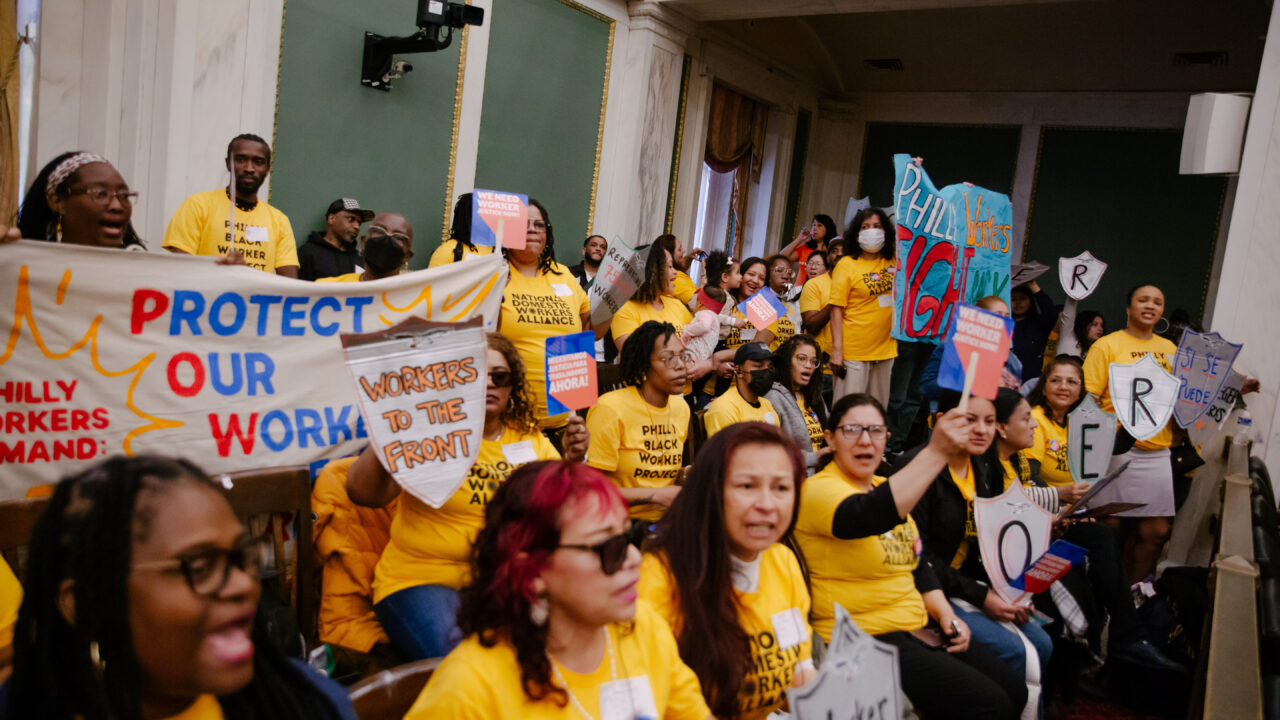
How a worker-led coalition won Philadelphia’s POWER Act (the Protect Our Workers, Enforce Rights Act), and how they’re fighting to make it real. A few years ago, one of our members — a Black Caribbean immigrant nanny working in one...
-
Beyond Democracy, Everyone Eats
In this conversation, Claire Maracle, Executive Director of Words of the People, and Baratunde Thurston, storyteller and author of How to Be Black, excavate the origins of American democracy to expand and reshape our political imagination. It turns out we’ve...
-
Organizing as Ancestral Practice: Building Infrastructure for the Next Era of Movements
All social movements need infrastructure capable of sustaining across multi-generational fights. But how do we build this infrastructure and ensure that we lower the cost of onboarding new people into our movements so they can grow? As Judith LeBlanc, Executive...
-
Repair in Practice: On Wealth Redistribution
Wealth redistribution, as a relational practice rooted in accountability, has the potential to spiritually transform a person, as shared here by redistribution organizers Brittany Koteles and Morgan Curtis. Koteles, Executive Director of Land Justice Futures, an organization that supports Catholic...
-
Democracy and Decolonization: The Poor People’s Campaign and the Black and Indigenous Fight for Mino Bimaadiziwin
We are living in fascist times, which means we must remember history to help us understand the possibilities of our futures. Do we want to subjugate ourselves to the tyranny of a dictatorial leader? Or do we want to struggle...
-
Braided Movements: Black & Indigenous Perspectives on Reclaiming Land
In a country where land has historically been central to wealth and power-building, we must carefully consider how we want to work together towards land reclamation. Kailea Loften in conversation with Nick Tilsen and Brea Baker At the start of...
-
Reclaiming Power as a Practice to Get Free
The abolitionist movement transformed America from a slaveholders’ republic into a multiracial democracy in just decades, proving that organized people are the engine of real change. As America turns 250, social movements can look back on where we’ve been to...