All social movements need infrastructure capable of sustaining across multi-generational fights. But how do we build this infrastructure and ensure that we lower the cost of onboarding new people into our movements so they can grow?
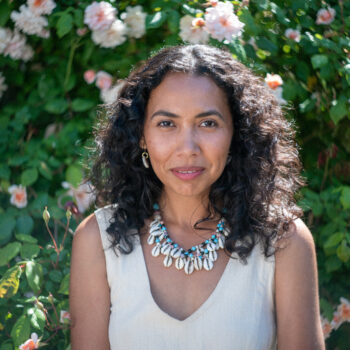
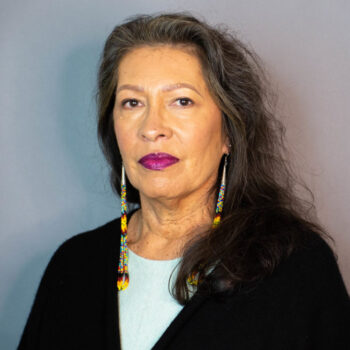
As Judith LeBlanc, Executive Director of Native Organizers Alliance, and community organizer Jawanza Williams reflect to Guest Editor Kailea Loften, continuing to recognize that our power exists in the collective is the starting point. Building trust and meeting people must remain central to organizing best practices. As Judith shares, “organizing is about dealing with people who you don’t like, who’re not your bestie. It requires love, discipline, and a strategy to carry out. Discipline and love. People talk about love all the time, and I love love. But love is about discipline.”
Kailea: What is organizing, and why do we organize?
Judith: We’ve been organizing since the creator brought us into being. Our origin stories show that we’ve been organizing ourselves since dirt, since the beginning of time, because it is the only way to create community care and protection. It’s the only way that we can think about the future and the past, and move together in the present. Organizing is not a choice.
I often think about our ancestral responsibilities to organize ourselves. I’m talking about all of our ancestors. Nelson Mandela, Mother Jones from the labor movement, Sitting Bull. You can name any place in the world, and there have always been people who have accepted our ancestral responsibilities to organize.
Some people say — and I know it’s part of the ethos of the mainstream organizing movement, the Saul Alinsky kind of drive — that you organize to meet people’s needs no matter what it takes. I don’t believe that’s true. I think we do organize to meet people’s needs, but how we move defines why we move together. And the how has to be centered in the synergy between the heart and the mind. The soul and the physical needs. We need culture in how we do this work.
That’s why we move together: alone, we cannot achieve very much. And capitalism as a system promotes the idea that there’s always one individual with a really bright idea, you know, like Abraham Lincoln freed the slaves. Sorry, not true. It was generations of people who organized. That means 40, 60, 80, 100 years of organizing.
Jawanza: Organizing, to me, is a multidimensional practice of orienting oneself and recognizing and deepening value in other people.
I came to organizing through my own direct needs as a young person living with HIV. I was experiencing homelessness. I needed access to health care and stable and secure housing. I happened to meet VOCAL New York at the particular time I was going through this experience. I became an organizer after being organized to save my life and others’ lives, and to improve the quality of our lives. But I quickly realized that organizing was about distilling the amorphous, wide-ranging principles of love, care, compassion, respect, and the honor of human beings into tangible parts that made sense. We can grapple with that and use it. That means having conversations, building relationships. It means producing culture. All the things that bring us back to center, that help us tap into what makes us truly human.
I learned organizing through the Alinsky framing, but for me it’s truly about helping, not controlling or directing: helping to inform the force that we define right now as a social movement. This force of truth, this force that has been here since before 250 years ago, that has always been blasting us forward towards our collective destination and state of being. Those of us who decide to become organizers are helping to inform that force.
Judith: You touched on something that I often return to when considering what supports our keeping on in the face of such tremendous obstacles and danger as there are now, which is love and care, respect and discipline.
Organizing makes us more accountable to others. Movements are not controlled by any one person or group. And we’re in a period, almost a generation really, since the Iraq War, where you can see the growing acceptance that if something goes wrong in your community or in the world, you know you have the responsibility to get out on the street corners.
During the Iraq War, there were thousands of little towns and big cities all across the U.S. and the world where people, on a weekly basis for years, would go out on the street corner to proclaim their opposition to a war based on lies and oil. Now it’s the No Kings movement. It’s not easy nor safe for many people, but they have chosen to be part of this big movement to say no to the Trump administration’s policies and to get out and make their own sites on the streets. How beautiful is that?
So organizing is done by organizations that commit to it, but there’s a lot of self-organizing. Take a look at Minneapolis in response to the ICE surge. It proves that our traditional practices since the beginning of time have always been about organizing for community care and protection. You can’t have one without the other. If you’re going to have a sense of well-being, you also have to feel safe.
It’s neighborhood kinship. Many people didn’t know one another, but they were ready to face incredible dangers to protect children from when they got off their school buses, to provide food, to patrol the streets.
That proves that self-organizing and the fact that people understand movement, that they understand enough to create their own Signal channel, to be on alert, to be called into action at a moment’s notice. It’s all a testament to the fact that organizing was not discovered, like Plymouth Rock was, according to some. The rock was not the discovery of America.
We’re in an era where organizations have to understand that this moment of people self-organizing is an amazing opportunity to do mass popular public education about the systemic roots of the crisis, because the problem is not Trump. The problem is the system and the very few who would use it to continue to profit and push the burden onto the majority, onto our backs, and onto our land.
Kailea: I’m appreciating the framing of organizing as a traditional practice and how it helps us understand that this is nothing new. Being an active community member has always been about practicing agency and accountability to the collective.
You have both worked for organizations focused on movement infrastructure over the years. Could you each explain why social movements need scaffolding? What conditions set us up to fall short, and what conditions create durability for our movements?
Jawanza: Whenever I was a person being organized by organizers, I responded to a genuine practice of checking in, a genuine practice of creating community. When I first joined VOCAL- NY, we would have a general membership meeting every month at the same time, at the same place. There was a lot of organizing talk, a lot of campaign talk, a lot of talk about how are we going to get this bill passed, how are we going to get this politician to move this way or that. But the reason people return, and this is what became the focus for me as an organizer, is because it was a space where people wanted to be present. Where people wanted to come to be with other people.
For thousands of years, we have gathered with our people. In the organizing context, we can expand who is considered our people and who is included in our people. We need to build a community practice of this, where we’re gathering not because you’re supposed to but because, when you come here, you are among family and friends. It’s a good feeling, and you don’t want to miss out. So how do you make that part of your regular organizing practice as a structural piece of how we do our work? There has to be space and time for breaking bread so that people can communicate and just be together.
Our organizing scaffolding should be malleable, like bamboo. Bamboo is strong and durable, but it can bend, and organizing can bend based on the people who are a part of it. People do move on — sometimes they simply go to a new state and get a new job — so we need practices, stories, and ways of generating our work and ideas that outlive individuals and are permeable enough for new people to use and make their own.
It’s important that people entering social movements or organizations do not have to reinvent the wheel. We should not assume that just because people have joined in, they know what they are doing. I was college-educated when I joined VOCAL, and I didn’t even know about organizing. So we need scaffolding to meet people as they come in.
Judith: As the Lakota, Dakota people always say, you have to know where you come from to know where you are going. And I would add, therefore, know what to do in the present. At this time, at the 250th anniversary of the idea of America, it’s not the same as in past periods of history. Every period of history is unique. We have a situation where 70% of the people in this world live under the rule of totalitarianism. We are in the 30% who are fighting the consolidation of totalitarianism.
There is a global context in the struggle that we are in now for human rights, to protect Mother Earth, to end the threat of war and destruction, to ensure people are not hungry. This is a global context. I think it’s decisive in a lot of ways.
Social movements have a natural rhythm. When you look through history, there are times of great upsurge when the people go into the streets, take the power and win significant structural changes, or at least blunt the force of repression. But you can’t sustain being in the streets 24/7. Of course, there are examples of long-term struggles that ended with significant impact. For instance, during the Montgomery bus boycott, people walked and self-organized rides to work for over a year.
In social movements, there are cycles of peaks and then periods when they slow down. In between those big peaks, organizations have the responsibility to consider how to help people sustain their awareness of what they’ve achieved and what the next steps are. Right now, we’re talking about a push for power that is called totalitarianism, and that is using any means necessary. We have never been this close to that kind of rule. The closest call was probably in the 50s when they were putting socialists and communists in jail for their beliefs. But even then, the people were able to push that back and to emerge into big movements in the 60s and the 70s.
These peaks we’re in right now give us an opportunity to help people understand what is happening. We have to narrate — not tell them — narrate what we have done and how we can stay strong and continue forward. This happens through popular political education. And for many, election cycles are part of that educational process when you’re fighting totalitarianism. From my vantage point, elections don’t solve problems. They create different conditions under which we will solve the problems. In which we will organize. In which movements will grow.
In 2020, we saw historic voter turnout across every community. It was the first time that Indigenous power was recognized by the political parties. We are a decisive electorate, but we were never considered that. But we flipped Arizona. And there are seven states where the native vote is a decisive swing vote. North Carolina has 330,000 natives. Nobody knows. Nobody talks about that. It is a decisive vote in Wisconsin, in Michigan, in Nevada; there are states that are considered by the political parties as swing states where a native vote is substantial and can make the difference. In 2020, we proved that through our actions and organizing in the wake of Standing Rock. In the wake of the 2018 election, the first two Indian women were elected to Congress. We never had our Barbara Lee or Maxine Waters. We never had that for our children.
And so when we went into 2020, we were able to mobilize at the grassroots because representation matters. Representation isn’t a destination, but it matters. So when that election happened, it changed the conditions we were organizing within. We mobilized immediately after the election to put pressure on the transition team to nominate the first Indian woman to head the Department of the Interior. We knew that having an Indian woman in that position would lay the basis for us to organize for structural changes. So we got over 200 tribes and 19,000 people to immediately put the pressure on the transition team. They didn’t want her. They wanted an old white guy, but they were finally pressured to nominate her.
It changed the conditions at the time. But the truth is, right now, the right wing has gained momentum, and their structural organizing has been going on for much longer than ours. I point to 2018 and 2020; that’s nothing. They’ve been organizing since the Goldwater campaign, when they began investing substantial resources in think tanks like the Cato Institute, running local elections, and creating their boilerplate for repressive legislation. Even if it wasn’t passed in the 60s, 70s, or 80s, or if it was and it was repealed, they have maintained a steady flow of resources.
So why do we fall short? It’s not for lack of vision. It’s not for a lack of need or discipline. In my opinion, it’s a lack of understanding that there are no easy wins. Not everything can be solved in the short term. We need a long-term arc. But we don’t think that way. We’re always thinking about the next thing. And of course, we face the pressures of hunger and deprivation. We haven’t built, as Scott Nakagawa would say, a river of resistance. What we’ve done is stay in our streams, doing what we need in silos.
The second thing I think causes us to fall short of resources is money. In Indian country, we get less than 1% of all philanthropic giving. The Black community, less than 5%. So resources, yes, to build programming, but more so for the human resources. We don’t put enough emphasis on the grassroots people. That’s what we’ve got to learn from L.A., Chicago, DC, and Minneapolis.
People are the power. And so building relationships at the community level, where you grow that circle of trust, is what enables really militant, disciplined action to change policies.
Which leads me to the last point. People have talked for many years, many decades, about base building. What does that really mean? It means that you are actually in relationships with people that you might not like, relationships with people that you might not agree with. But you are in relationships with people because you understand where power is. And that power cannot be exercised across differences unless you build trust and a shared understanding that together we’re stronger.
That’s base building. It’s not mobilization; it’s organizing a base. And that organizing is about dealing with people who you don’t like, who’re not your bestie. It requires love, discipline, and a strategy to carry out. Discipline and love. People talk about love all the time, and I love love. But love is about discipline. King said it himself: power without love is abusive. I’m not discovering Plymouth Rock here. This is the truth.
A recent example is the ten-year struggle to stop the Keystone XL pipeline. We were involved on the ground in Seattle in the last five years, and what was the key? It was grassroots, tribal, and the alliances with white ranchers and farmers. And the only basis for that alliance was their understanding of the natural world. They felt about the river the same way that we do. Maybe not for the same reasons, but they felt that the river was a living thing that needed our protection and that we could only protect it together. That’s what enabled us to win after 10 years. The stopping of that pipeline.
So the base building there was among people we didn’t think we had a common cause with, among people that we didn’t think felt the same way we did about the natural world. We had to make alliances and make kinship with people who had, in the initial analysis, stolen our land three or four generations ago. And on the other side of the table, we have to say that’s the past. Right now, this is what we can do together to protect what is critical. The river.
Jawanza: Judith, while you were talking about base building and about recognizing that people may value the same thing for different reasons, I reflected that when I’m organizing I have to be able to discuss issues across different contexts. I have to meet people where they are.
Part of this is also helping people develop new ways of seeing the world. Helping people see their own identity, their own experiences. I’m also always looking to see who’s missing in the conversation. And I work to go find them to bring them in. That’s discipline. It’s hard. It slows things down. But it should be a fundamental goal of any structure you’re building for your organizing project.
Kailea: I’m appreciating how both of you get to the heart of the ideas and the frameworks that can feel big and challenging to approach. I’m hearing that, at the core, it’s about taking the time to understand what people value, which means we have to meet people with real curiosity and a level of earnestness.
It’s clear that we do need to lower the cost of onboarding and collaboration when inviting and bringing people into our movements. How do we do this?
Jawanza: The entry threshold needs to be as low as possible. Base-building projects need to be about identifying potential leaders, identifying issues impacting communities, and offering a worldview, rather than telling people what to think.
People who are in crisis should be able to participate. When I was experiencing homelessness, I had also just recently been diagnosed HIV positive, and I was in New York, which was a new city, by myself. I’d never been to a big city before. It was crazy. If it had been difficult for me to join, for instance, if I had had to prove myself, I would have felt excluded. And we’re supposed to be the people coming together to fight exclusion.
We also need a low barrier to re-engagement if people fall off the project. One thing I really appreciate about organizing with VOCAL New York is that there are two tiers of membership. There are the general members, which include everyone who is impacted by the issues. General members inform us about what’s going on. They help us understand what communities are experiencing firsthand. The second tier is also made up of people from the general membership, but they have committed to advancing this work and to bringing new people in. These positions are non-staff positions at this organization. You’re a person, just like me, who’s experiencing different things, and you’ve decided to be transformed by this work.
As a last point, when I’m bringing new people in, I diversify how people consume information. I screen videos before the meetings even start, of people, for instance, in an action, so you can see what’s going on. I’ll have music playing, but I’m always intentional about the music and lyrics. I’m considering all of this as part of how I build an inclusive room for everyone we are trying to get in there. This even ties into public transportation infrastructure, because how people will get to the meeting is important to consider.
Judith: I would love to spend some time interrogating the idea of movement spaces. I think it has always struck me as exclusive, whereas movements are so broadly inclusive that people, you know, who never did anything before suddenly make a sign. That’s a movement.
And I was thinking: If we were to interrogate and define what movement spaces are, then maybe we would have a different approach to the structure of organizations and to our relationships with the communities in which we serve, because organizations inherently are not movement spaces. That’s what the Native Organizers Alliance does: we support the leaders, the organizations, and the movements. The Keystone XL movement, the Standing Rock movement, the movement for representation in government.
I just came from Minneapolis. I’ve been there a few times during the surge. I have family there. My sister-in-law teaches in the neighborhood where the surge was happening in the Indian community. And we have had partnerships with one particular organization for nearly a decade. I also used to live there in the 70s during Wounded Knee. So I have a lot of ties. I know the history and the grandchildren of people.
So if you’re sitting in Minneapolis, and you’re in an organization that supported the movement because there wasn’t one organization that set up these Signal channels, or the food distributions, or the rides for students, or the patrolling. It emerged citywide and in Saint Paul. Some organizations became hubs where people could come, rest, and figure out what’s going on. There were hubs where people could pick up food.
There’s still ICE there; they’re not totally gone. But the people’s power forced a change in tactics and compelled the government to remove those who were there representing the federal government, and ultimately, you know, got rid of Secretary Noem, the former governor of South Dakota. So what do we do now?
We had a day-long discussion with the organization we partnered with about how to encourage and engage people from the movement. What is it that we initiate that can continue to build a connected relationship? What is it that can be done culturally, politically, and spiritually? What are the elements? And then how do we give them opportunities to connect with the movement? Because these people took action and became even more prepared for the next time. This is not a one-off. If you’re thinking about a 20- to 40-year struggle to stop totalitarian and totalitarianist governance, then you’ve got to be thinking about how to build trust.
You can’t be event-driven now. You’ve got to be purpose-driven now to consolidate the relationships between people who moved by their hearts and took incredible action under duress. How do you keep them in a relationship around your organization? Because that’s the only power you have.
You can’t create a movement space. The space you have is the role you played in the community and the accountability you’ve had to the community. The group we have partnered with for 10 years has a 35-year history in the native community and is known and trusted. So how do you use that position and accountability in the community to create these broader circles around you who will be prepared to take urgent action the next time?
Kailea: There is so much to glean here. Before we close, any last thoughts?
Jawanza: Trust that if you help develop the people, the movements will manifest. We do this by identifying the values we want to uphold in our hearts and minds for how we work.
And remember, that it’s not just about your organization.
Judith: This time, it’s not like the past. This is a time when we must think about the next 20 to 40 years as it relates to our everyday practical work as organizations.
It’s going to be hard for some to lead with both our hearts and ideology, our souls and worldview, because you can’t separate one from the other. But we must if we are to have the discipline and courage to confront rising totalitarianism.
And third, movements make change. That’s a proven social fact. And they must change organizations and how we organize. We must learn the lessons that movements teach us. When masses of people take action, we have to study it. We have to analyze what it means for how we do our work going forward as organizers and organizations.
Because in the final analysis, people have the power, and when they’re in motion, we can learn some valuable lessons about when, why, and how we organize.