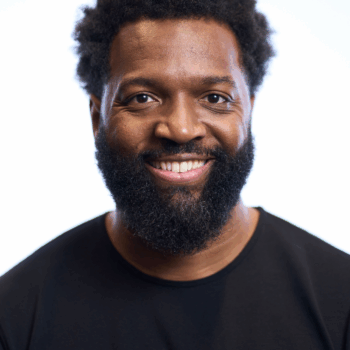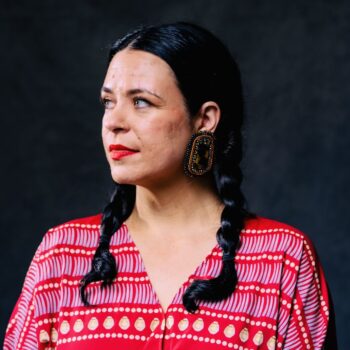
In this conversation, Claire Maracle, Executive Director of Words of the People, and Baratunde Thurston, storyteller and author of How to Be Black, excavate the origins of American democracy to expand and reshape our political imagination.
It turns out we’ve been dreaming too small.
Baratunde: You’re Claire, I’m Baratunde, and we are human beings on this earth. And that’s just a beautiful thing to be.
Claire, could you introduce yourself?
Claire: Shé:kon sewakwé:kon, Ionkiats Claire. Kanienkeha:ka niwakonhwentsio. Ohkwa:ri niwakitaro:ten. Hello, everyone. My name is Claire. I am Mohawk Bear Clan from the Six Nations of the Grand River. My great-grandmother was Sue Staats, and her grandmother was Susannah Maracle. I am someone who holds status under the Indian Act in Canada. I was born in the United States, in Mankato, Minnesota, and was raised in Tulsa, Oklahoma, where we moved when I was nine years old.
Baratunde: Welcome, Claire.
I am Baratunde Thurston. I am descended from Anita and Arnold, who are from Washington, DC. And my mother descended from Homer and Lorraine, also from DC. My father descended from Dora and Leon, who moved to DC from South Carolina to live in a slightly less racist place. I’m a child of this land, for as far back as I can discover. And then it becomes quite mysterious, though it’s pretty obvious that my people were brought here against their will.
And I’m very glad to be here with you, Claire.
So there’s the beautiful fact of us sitting here. Me as a Black American descended from enslaved people, stolen from our land and brought to this place. You as a Mohawk person, who is part of the legacy of a nation that predates any of these names — Canada or the United States of America — and we’re choosing to be in relationship, across these histories, for something bigger, for something better.
In our email exchange leading up to this, you wrote something I want to reference about “not performing a perfect, untouched identity, but showing up in our actual messy selves and choosing each other anyway.”
Can you expand on that?
Claire: I did mention that, and I’ll talk about this openly in my positionality. When The Forge approached and asked us to do this, I was like, not me. I’m not a scholar. I’m a poet. I’m not someone who was raised on a reserve. I am someone who is still learning their language. I am navigating this deep disconnection that religious colonization created in my own family line. Like, who am I?
I sat with that for a little bit in terms of the responsibilities I have to my ancestors. It reminded me of the phrase we have, Sha’tetionkwatte, meaning, we are in equal height,” also, “no one’s voice is above the other.
And so, I’m not here as a knowledge keeper or as a representative of my nation. I’m here as someone who is on their journey back. I’m in the process of rematriating, of reclaiming. As Michelle Schenendoah defines in her Rematriated Voices series, this is the process of returning the sacred to the mother. This is not a disclaimer. I offer all of these things to give you context to say this is how we can be in relationship with each other.
Baratunde: I hear you. We were invited to explore how democracy in North America predates the United States, and you wanted to push beyond the word “democracy” itself. You called that even a form of colonized thinking in reference to The Great Law of Peace. The Kaianere’kó:wa.
Tell me more about that desire to expand beyond this word, and what terms feel right for you?
Claire: We’re so colonized in our minds that I think it’s funny to me that we can only understand native ways through European words. Calling it democracy diminishes what it actually is. It’s a way of life. It’s about being in peace, balance, and harmony. It’s called the Great Goodness, The Way of Forever. Because it’s the way we live forever, in harmony and balance with creation. And balance isn’t something that you just achieve one day. Balance is something you work to maintain. So it is a continual way of being, in harmony with love for all of creation, where we all share a responsibility and values. It’s a holistic way of being that goes far beyond a form of governance.
Baratunde: Thank you for all of that, for speaking to how — I’ll put it in air quotes — “democracy” in North America predates the United States. It’s so much bigger than we’ve been led to believe. It was, it is, a way of life about deep connection.
I’ve been pretty strident in my critique of and belonging to the United States of America for as long as I can remember, and thinking I know something about this nation’s story. And within the past several years, I learned of some of the stories of the preceding nations that were on this land before the U.S. was established, and in particular, the Haudenosaunee Confederacy.
I learned this not from a book but through relationships with certain elders living in the Mohawk Nation territory of Akwesasne. It is impossible to properly name all who made my awareness possible, but I must acknowledge Oglala Lakota wisdom-keeper Loretta Afraid of Bear Cook and her husband Wolf Clan Mohawk Elder Kanatakeniate Tom Cook, as well as their brother-in-law, Taíno Elder Hatueyael Jose Barreiro, a novelist, journalist, scholar, and activist, who has spent most of his life dedicated to the defense and well-being of Indigenous Peoples.
Now I’m going to do a very brief and incomplete primer on how we all ended up where we are today. Which is that most of us are taught that in 1492, Columbus sailed the ocean blue and stumbled his way into what he thought was India. And nobody told him otherwise. White folks created wars with the native people here. While simultaneously some of their scholars broke the shackles of authoritarianism and monarchy, freed themselves, and created a heretofore unseen, unpracticed form of self-governance called “Democracy,” drawing inspiration from the Greeks and the Magna Carta. And they deployed these radical new ideas in this new “empty world.” And we’re now the beneficiaries of that legacy.
Obviously, they left some people out. You know, Black people, Indigenous people, women, plants, all forms of life were not considered. We’ve been error-correcting since. People like Frederick Douglass and Sojourner Truth come along, and they’re like, “We’ve got to improve on this!”
But prior to any of that, there are many nations living on this land, and there is a preeminent confederation of nations, the Haudenosaunee Confederacy, the Six Nations. And they were operating under the Great Law of Peace. All to say that when the Europeans landed here, they encountered political power. They encountered ecological respect. They encountered this whole society that they had to deal with and were in a relationship with for hundreds of years before the bright idea occurred to a European descendant to have something that might be called and look a little something like what we call democracy.
A lot of the symbolism of the US — the tree, the eagle clutching arrows — are all symbols borrowed — if I’m being real nice — from the Haudenosaunee. Benjamin Franklin, one of this nation’s most noted founders, was enamored with the Haudenosaunee in the early days. As Pennsylvania’s Indian commissioner, he wrote extensively about this beautiful form of existence and how “we white folks got to get our shit together. We can learn something from these so-called savages.” That’s the tenor of his satirical call to action to his own people.
Rome is an important word to bring in, because we’re clearly going through our own Roman collapse right now. But there’s a key moment within the formation of the US that I learned about on my educational journey. During the formation of the US, there were many debates, and many articles were written. The Federalist Papers came into being. And there was an emerging debate that the scholar-doctor Robert Venables writes about in the book American Indigenous Democracy: A Call for Interdependence.
And it’s this debate about Rome amongst the founders of the U.S.: There were all these different tribes in Europe at one time, and what happened was Rome came and crushed them all, unified them under a standard language, a standard currency, and a single ruler. Created an Empire. And it was that moment within the discourse around what this nation was going to be that many decided “we’re not trying to be these tribes that got crushed by Rome. We’re trying to be the Romans.”
So much of what we experience today is because of a conscious choice to choose the path of empire. And because of this choice, we lost all of the powerful Indigenous principles for living that the founders we celebrate excluded in their iteration of governance on this land.
I’m gonna pause here on my attempt at a brief retelling. I don’t want to Blacksplain your history to you. What would you add, Claire?
Claire: The irony of these white men coming here and borrowing ideas from a people that they considered primitive, that they said were savages. Yet they wanted our sophisticated way of thinking; they were inspired by us despite using language to diminish us.
The Great Goodness is to me almost a holistic health plan. And the foundation of it all is that you have to have a Good Mind. Healthy minds make good decisions. You have to have a healthy mind to be a good leader. You have to grieve and not let your negativity rule. You have to be someone who’s in touch with their emotions. You have to be thinking seven generations ahead. As long as we’re all thinking about future generations, we’re unified.
I think another important part that was emphasized by Leon Tadodaho (Leon Shenendoah was an Onondaga leader who served as Tadodaho, the spiritual and political head of the Haudenosaunee Confederacy) is that if you killed someone, you can’t be chief. Look how far we’ve come from that teaching. That alone should have disqualified George Washington. How many people did he kill?
There is a complete disregard for the spiritual element and an absolute need to maintain hierarchy. They modified our teachings to maintain hierarchy. The U.S. has always been a protectionist state for the rich. There is all this talk about natural law or God’s law, which they try to say are traditional concepts. But law doesn’t exist in nature. Nature has balance. Nature has cycles; nature has relationships. Law, that’s a human construct.
We operate through families, through clans, through responsibilities that are passed down, not through people who campaign for office. So when they say the Haudenosaunee nation influenced the Constitution, I instead say that they observed, they stole, they bastardized, they took some of the form, but it lacks the spirit.
They saw a confederacy of nations, and they built one of states. They saw the separation of powers, and so they built three branches, but they missed the things that make it all work. The grandmothers, the clan system, the requirement that you think seven generations ahead, that you’re not allowed to sell land. The spiritual foundation is gone. They built a machine. And we are not machines.
There’s another important point to add: when the European settlers first arrived, they were offered the Great Peace. They were offered this as brothers, as equals. Do you know what happened? They were rejected. Our leaders were teaching that everyone eats. They were like, “That’s crazy! Give up our vast wealth, give up our power?” They refused to give up their wealth for the sake of their own people. That is an important distinction. That rejection set the course for everything else that followed. They chose conquest over coexistence. And we’re still living with that.
Baratunde: As I have been learning and studying this, the core principles that underlie The Great Goodness, as you refer to it, The Great Law of Peace— though it’s not law in the sense that most people today would think of law— the highest-level interpretation I was given is that part of how this came about was through observing how life operates. You’re actually attempting to restore and maintain humans’ position within the larger web of life. And so we gotta have a system of living, a holistic system of health, to quote you, a system of self-governance that is aligned with that.
I wrote a collaborative piece for Atmos with significant guidance from Jose Barreiro, a contemporary and confidante of preeminent Seneca scholar John Mohawk, who has done much to translate the Haudenosaunee message to the wider world, alongside Chief Oren Lyons.
In the piece, we outline five core principles, which are: (1) Women at the center of governance. (2) That there is a commitment to seven-generation thinking. (3) A reciprocal relationship with nature is upheld, in that it’s not just a thing to be monetized and mined and extracted, but understood as a living entity that we are a part of and in relationship with. And they are at the table, in terms of how the whole society operates, not just on the table. (4) That peace is the highest calling of government. And you cannot have peace without justice. (5) And then the fifth and final thing is that the law is aligned with the sacred, that there is a spiritual foundation. It is about a connection, a balance, and an interdependence across the living and non-living, across genders, species, positions of power, and the present, past, and future altogether.
Thinking this way requires a different kind of imagination.
Claire: We are required to expand our worldview and to live in peace. Our original instructions call us to be ambassadors of that peace in remembering what it means to be a real human being. Part of this is acknowledging gaps in our own knowledge without shame. And finding our shared values, our shared responsibility.
Baratunde: Yes, indeed! And that is going to require a radical change to the system, but it’s so hard. I’ve been holding on to some hope that we can make adjustments to the system. That we can call people to their better angels. That we can appeal our way to freedom, but it’s not enough.
About two years ago, I had a painful realization that maybe I’ve been fooling myself. I’ve spent a lot of my own energy appealing to white people to let me be free. That’s the shorthand. It was like, “See me! See my humanity! See my goodness! See my non-threateningness! See my smile, my big heart, my skills, my value. See us. And then once you see us, it’ll be obvious that you can’t treat us like this anymore.”
And that’s a twisted journey. Because I’m positioning my freedom in their hands. There’s got to be another way out. Can’t I just declare that I’m free right now and just act as if I am? I was speaking about this with the writer Carvell Wallace, and he was like, “Oh, you’re talking about the Black liberation paradox.” I don’t think this is limited to Black liberation. I think it’s like all freedom fighters, all freedom seekers, who find themselves in a society that doesn’t reflect their values at large. We are in a paradox: how do we change the actual system and exert and express our freedom without abdicating or outsourcing it?
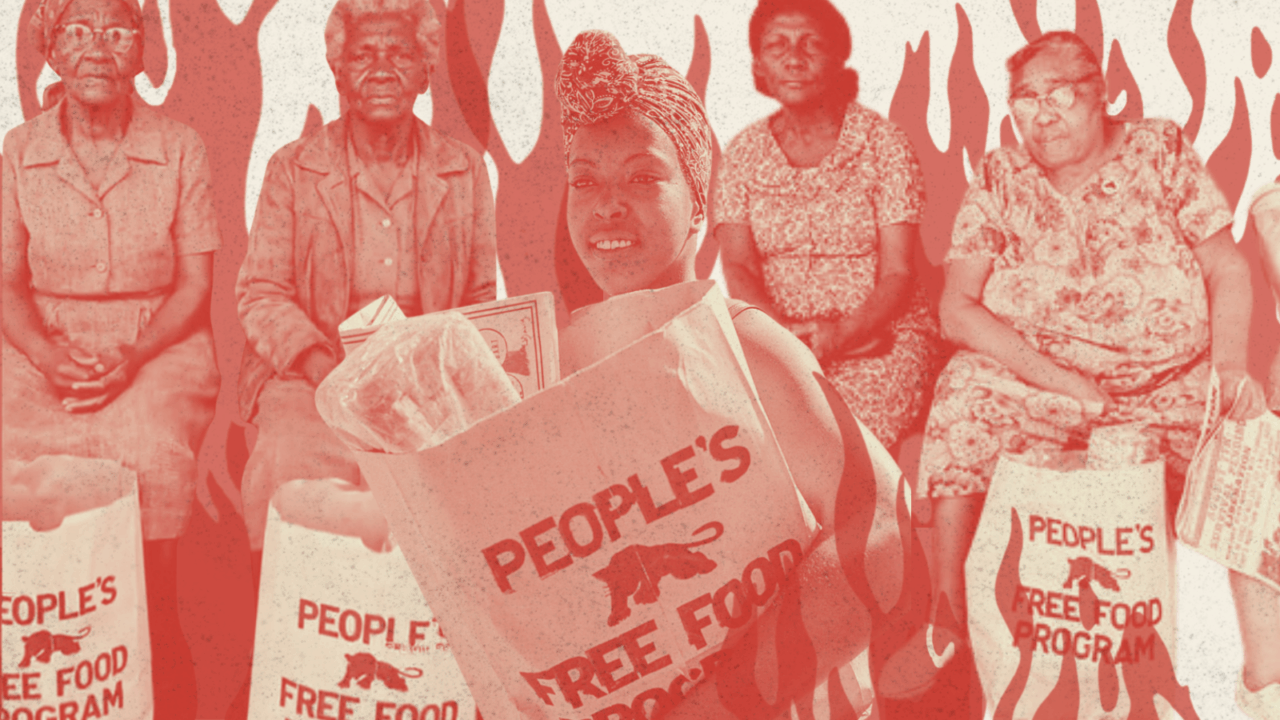
And the pain of this moment is that the system is falling. Rome is falling. Empire is falling. Everything is on fire right now. This is the time to declare interdependence with each other. It’s time to move beyond separation, envy, and conquest. Let all that go.
Claire: Peace isn’t the absence of war. Peace is the presence of justice. I think if we understood that peace requires justice, we would move differently.
If we’re going to restore ourselves, we have to restore our original thinking and our original values. And to learn those, you need to revisit the land and learn how to live sustainably upon our mother. We need land back and our minds back.
There is a war on our imaginations. We are expected to accept the inevitability of apocalyptic times: the inevitability of a godlike technology that could do amazing things, but is being used in barbaric ways. It’s becoming harder to imagine a new way. People need to stop outsourcing their minds. Don’t let AI take over, or wait for some leadership figures to tell you what is true. Go to the source. Learn your language, learn your original values, your responsibilities, and find your commitment.
We can become the evidence that the call to come home is being answered. And that is interdependent behavior. When people mutually benefit from an arrangement or a way of life, it creates sustainability. It’s good medicine. As BLIS has shared with us, liberation is only real when it’s shared, and also that reclamation is the central intervention of 2026. Nothing stolen is ever really gone.
Baratunde: Reclaim your mind is an incredible call to action. We need an embodied, experiential, lived, practical, hands-on way of living. And yes, nothing stolen is ever truly gone. That’s real important to hold on to. That’s the ultimate coming home.
It’s homecoming time.