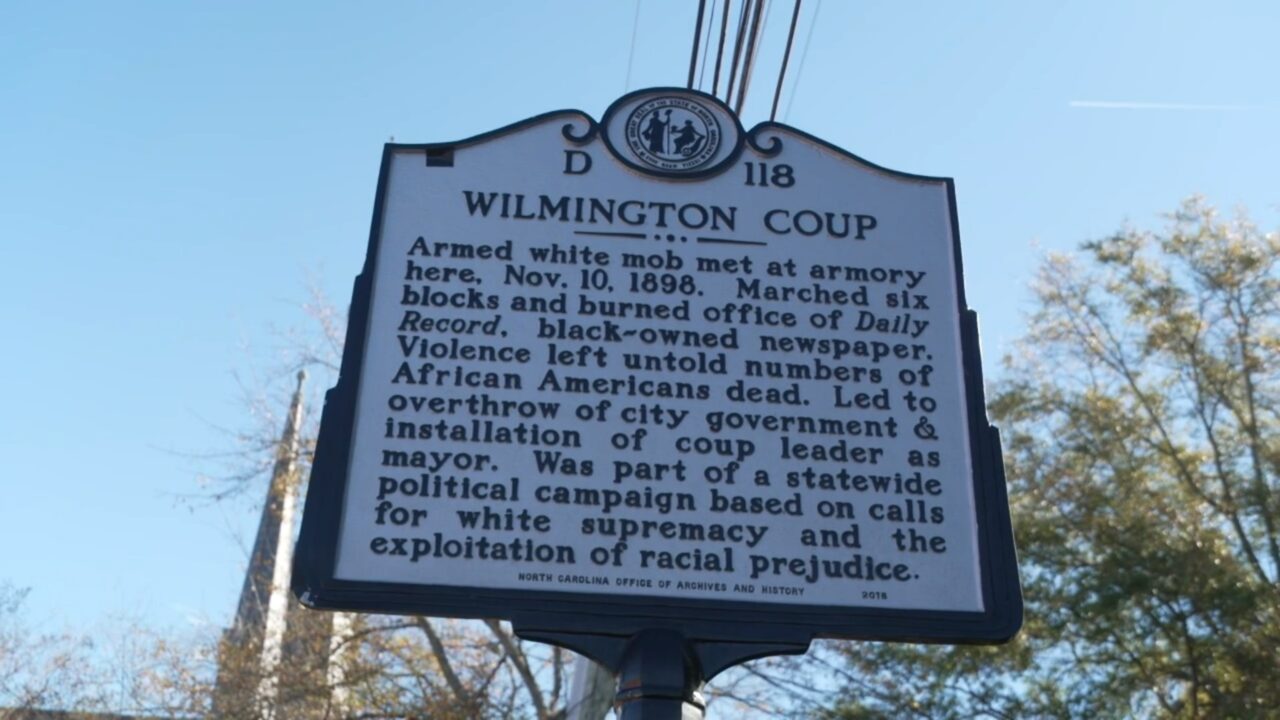
We examine how the 1898 Wilmington coup exposed the fatal illusion that electoral victories alone can secure lasting power when the ruling class retains control over violence, wealth, and the institutions that enforce both.
As the United States marks its 250th anniversary in 2026, our dominant cultural narrative will receive a brilliant polish. We will be told a comforting fable of linear ascension, the myth that America progress is an unbroken, upward line of gradual correction.
But grassroots organizers know this is a historical illusion. The ruling class uses its cultural dominance to demand we celebrate “the triumph of the American spirit” while ignoring the foundational contradiction of our origins: that America’s founding documents were written by 55 wealthy, White, land-owning men who enslaved human beings. They drafted promises of universal liberty while delivering only to a select few.
Historically marginalized communities never had the luxury of waiting for abstract promises to be granted by those in power. In 1787, blocks from where state delegates drafted the U.S. Constitution in Philadelphia, Richard Allen and Absalom Jones formed the Free African Society, a mutual aid network born from a refusal to accept second-class status.
By pooling a monthly subscription of one shilling per member, they built a collective economic safety net for Black families and an internal, self-governing structure where Black citizens could resolve disputes equitably, entirely bypassing a biased White legal system. Long before the state ratified the Constitution, these citizens practiced autonomous self-determination.
History reveals a dangerous pattern: whenever marginalized identity groups successfully organize grassroots efforts into tangible structural power, the dominant hierarchy does not concede. It launches coordinated counter-offensives to reclaim control.
To understand the fragility of democratic progress today, we must look away from Washington’s monuments and turn to a coastal city in North Carolina. There, in the winter of 1898, the American promise began to be realized, and then violently erased.
Turning Abstract Promises into Tangible Power
In the 1890s, Wilmington was North Carolina’s largest city and a bustling port of over 20,000 residents with a 56% Black majority. In 1897, the landscape shifted when a newly formed Fusionist state legislature ordered elections to replace Wilmington’s governance board, previously appointed by a White Democrat-led state legislature. The result was a new mayor, Silas Wright, and a multiracial Board of Alderman, which included three African American members.
Following the Civil War, African Americans in North Carolina achieved historic progress. Wilmington boasted the highest Black literacy rate in the state. Black citizens worked as skilled craftsmen, owned thriving businesses, and held vital civic positions as firefighters, police officers, and city officials.
This progress was accelerated by an extraordinary political alliance. Black Republicans and working-class White Populists realized their shared economic interests outweighed their racial divisions. United under the banner of “Fusionists,” this multiracial movement defeated, in a series of free and fair elections, the wealthy, conservative Democratic elite who long dominated the state.
Once in office, the Fusionists expanded voter registration, opening the doors for Black men to hold elected office. For a brief moment, the gap between what America’s founding documents promised and what they delivered began to close.
When Democratic Consent Meets Overt Force
The city’s displaced White businessmen and political elite panicked at their loss of power, their perceived reduction in economic opportunity, and a new social order where Black men stood as their political equals. In response, a faction of affluent White Democrats known as “The Secret Nine” and “The Group of Six” launched a coordinated campaign to seize the city government by force, partnering with the Red Shirts, a White supremacist paramilitary group.
The conspirators recognized that if Black and White working-class citizens remained united, the elite’s grip on institutional power would break permanently. To shatter this solidarity, they engineered a coup d’etat fueled by a manufactured crisis. Through propaganda and fake news, they claimed, “Black mobs” and race riots threatened White safety, manipulating racist and sexist tropes to incite explosive violence.
Prior to the 1898 fall election, the “White Supremacist Campaign” used open intimidation to suppress the vote. Armed Red Shirts marched defiantly through the streets. White labor unions staged armed marches demanding exclusive employment privileges. White men summoned Black leaders to a public demonstration of a Gatling gun’s firepower, explicitly warning them to withdraw from the ballot. Threatening pamphlets and inflammatory speeches by White supremacist candidates against Black voters added to the atmosphere of violence.
On election day, November 8, 1898, systemic intimidation and ballot subversion delivered a decisive victory to Democrats in statewide races. They immediately vowed to no longer protect Black citizens or elected officials from local White supremacist revolutionaries.
The following day, 454 men signed The White Declaration of Independence, proclaiming the framers of the Constitution never anticipated the enfranchisement of African Americans and declaring they would never again be ruled by African American men.
On November 10, hundreds of armed Whites, backed by local militias, turned Wilmington into a conflict zone. They destroyed Black-owned property, torched the office of the Daily Record (the city’s Black-owned newspaper), and marched on City Hall. At gunpoint, they forced the legitimately elected Fusionist municipal leaders to resign, immediately installing the coup’s architects into office.
During the purge, White supremacist forces murdered an estimated 60 to 300 Black citizens. A violent faction dismantled a thriving, multiracial democracy in a single afternoon. A decisive turning point for Post-Reconstruction North Carolina, the coup’s architects didn’t just win the day; they seized influential state political positions and installed a regime that ushered in the Jim Crow era for more than 60 years. A sign that winning progress is not the same as maintaining it.
The Modern Ghosts of 1898
The Wilmington coup demonstrates that civil rights advances remain fragile when underlying power structures remain unaddressed. The Fusionists won elections, changed laws, and held titles of authority. Yet the fundamental infrastructure of concentrated wealth, a monopoly on organized violence, and institutional bias remained in the hands of the old elite. That foundational imbalance enabled them to coordinate a violent coup that reinstated the city’s displaced elite to power, a reversal so complete it took more than six decades to regain the legal rights stripped away in 1898.
As we confront the celebrations of America’s 250th anniversary, we must face the uncomfortable reality that violent, subversive tactics to dismantle progress are not buried in the 19th century. We see the modern ghosts of these strategies in the U.S. Capitol insurrection on January 6, 2021, the immense political pressure placed on local election officials to “find” votes, and the coordinated campaign to delegitimize votes from highly diverse urban centers. These are directly descended from the visible power deployed in Wilmington, a modern expression of a ruling class that refuses to accept the will of a multi-ethnic, multiracial electorate.
Wilmington serves as a stark warning: equity is not static; it requires constant vigilance and intentional foundation building. If we do not design democratic institutions and modern coalitions to withstand highly coordinated structural attacks, a single crisis can dismantle decades of progress with terrifying speed.
The elite ruling class uses the full breadth of resources at their disposal to maintain permanent control across generations. It may start with physical violence, guns, and paramilitary mobs, but to cement their rule, they must move from the streets into the quiet halls of government and use the law to rewrite rules and build institutional blueprints.
In Part 2: Hidden Power, Codified Inequality: From Jim Crow to Project 2025, we examine how the architects of Wilmington’s coup moved seamlessly from physical to structural violence. Their use of hidden power exposes how modern institutional frameworks like Project 2025 echo historical legal blueprints to hoard power for a privileged elite.