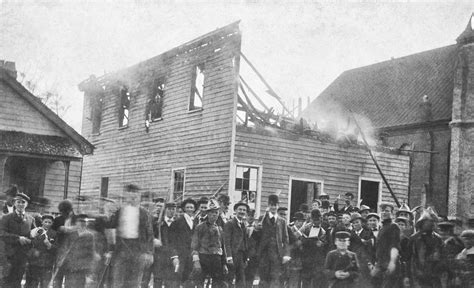
Part 3: Invisible Power, Exploited Disinformation: The Architecture of Manufactured Consent, we explore this psychological terrain. We examine how the architects of the 1898 coup employed media syndicates, fabricated crises, and stereotypical tropes to manufacture the public panic required to justify a violent uprising, and how today’s digital disinformation ecosystems deploy those same methods to fracture modern solidarity.
In the months leading up to the Wilmington coup of 1898, elite White supremacists understood a fundamental rule of power: to make structural violence palatable and to ensure ordinary citizens tolerate or participate in limiting their neighbors’ rights, they had to control the information ecosystem. They deployed invisible power to reshape society’s psychological landscape, dictating what the public believed to be true, normal, or dangerous. By manipulating popular media with false news stories, the ruling class captured public consciousness, shifted social values, and successfully incited paramilitary violence. Ultimately, they conditioned the public to cheer for the destruction of their own democratic safeguards.
The 1898 Fake News Machine
The chief architect of this psychological warfare was Josephus Daniels, publisher of the Raleigh News & Observer, then North Carolina’s largest circulation newspaper. A vehement White supremacist, Daniels transformed the publication into a militant propaganda organ, printing sensationalized, fabricated articles designed to stoke fears of Black men as predators. His editorial line championed a toxic narrative: that Black political and economic advancement directly caused a wave of violent crime against White women.
To maximize his reach among the 25% of White voters who were illiterate, Daniels hired cartoonist Norman E. Jennett to translate this propaganda into visceral, terrifying imagery. To achieve maximum saturation, Daniels sold his newspapers at cost to the Democratic Party, which distributed them for free to White voters. This calculated campaign successfully fractured the multiracial Fusionist coalition by pulling White, working-class populists away from their Black political allies through emotional manipulation and raw racial panic.
When Alex Manly, the Black editor of Wilmington’s Daily Record, published an editorial challenging these hyper-sexualized tropes, the propaganda machine pounced. White newspapers across the state reprinted his editorial, framing it as an existential assault upon White, Christian womanhood. By the time the armed mob marched into Wilmington, the psychological groundwork was complete. White militia members did not see themselves as perpetrators of an illegal, bloody coup; they saw themselves as a heroic rescue party saving their city from a manufactured monster.
Laundering History through Revisionism
In the wake of the coup, invisible power shifted from inciting violence to laundering history. Mainstream media relied exclusively on the testimony of insurrectionists. Popular magazines falsely depicted the violent overthrow as a “Black riot,” erasing the reality that White militias had killed Black citizens and exiled elected officials at gunpoint.
This revisionist mythology was quickly reinforced by popular culture. Racist novelizations like Thomas Dixon’s The Leopard’s Spots reframed the bloody overthrow as a glorious revolution, an act of “Christian manliness” against a corrupt carpetbagger regime that threatened business, law, and safety. This literary tradition laid the ideological groundwork for Hollywood’s notorious 1915 film, The Birth of a Nation.
This romanticization of events solidified into the public and academic understanding of American history. For generations, paternalistic historians labeled the coup as a necessary “reorganization” of social conditions, framing the violent oppression of African Americans as a “blessing to the community.” Once institutionalized, the Jim Crow regime moved from rewriting history to physically erasing Black citizens from the civic record altogether, even going so far as to physically edit Black men out of a 1920 historical photo before hanging it in the Governor’s mansion.
Modern Echo Chambers: The Digital Evolution of Invisible Power
The ink-stained printing presses of Josephus Daniels have evolved into sophisticated algorithmic feedback loops, yet the underlying blueprint of invisible power remains unchanged. Modern structural attacks require the same fuel for their digital disinformation systems: a manufactured narrative of victimization, cultural erasure, and existential threat engineered to shatter community solidarity.
This playbook of revisionist storytelling manifests clearly in the coordinated effort to rewrite the history of the January 6, 2021 U.S. Capitol attack. By promoting the fiction that these defendants are “political prisoners” and “patriots” fighting widespread election fraud, revisionist architects have generated the political cover necessary for the executive branch to grant blanket clemency, pardoning and commuting the sentences of nearly 1,600 people involved in the insurrection.
Furthermore, the Trump administration drives this revisionist campaign directly into federal policy through the executive order 14253, “Restoring Truth and Sanity to American History.” This mandate forces federal spaces, public history projects, national parks, and the Smithsonian museums to emphasize a sanitized exceptionalism while actively minimizing or erasing exhibits documenting structural injustice, slavery, and the historic struggle for multiracial democracy.
Today’s invisible power adapts modern algorithmic engagement to amplify outrage, exploiting a psychological feedback loop to manufacture popular consent for autocracy:
- Cultural Scapegoating: Framing equity and diversity initiatives as coordinated campaigns to “erase” traditional American identity.
- Dehumanizing Narratives: Concocting false, highly viral stories about widespread violence and corruption within immigrant communities to justify and build tolerance for militarized ICE raids.
- Administrative Euphemisms: Branding targeted voter suppression as “election integrity,” while simultaneously celebrating the Supreme Court’s dismantling of the Voting Rights Act in Louisiana v. Callais as a triumphant return to “Constitutional originalism.”
Building Cognitive Immunity and Intersectional Futurism
If we leave the psychological landscape unguarded, even the most brilliant policy blueprints will fail. Transforming the embedded structures of the past 250 years requires modern movements to match our opposition’s unified commitment and deploy offensive narrative tactics to safeguard democracy:
- Inoculate: Expose the mechanics of disinformation before it takes root. Pre-bunking campaigns train communities to recognize the structural blueprints of fear-mongering and emotional manipulation before encountering them online.
- Reframe: Reject the opposition’s rhetorical traps. Instead of defensively operating within security and economic burden frameworks, reframe narratives to highlight mutual contribution, collective values, and shared destiny. This makes exclusionary fear-mongering impossible to sustain.
- Build: Establish coordinated, rapid-response media networks capable of bypassing algorithmic echo chambers. By partnering with independent journalists, filmmakers, and digital creators, movements can flood the ecosystem with a unified, values-driven storytelling engine.
Beyond defensive media, we must deploy intersectional futurism: the practice of leveraging speculative and imaginative storytelling, to expose the hidden trajectories of dominant ideologies. By projecting current patterns of exclusion into dystopian warnings or satirical portrayals, organizers can unmask the long-term dangers of modern power-hoarding before they are codified into law.
Concurrently, we must use visionary, speculative narratives to normalize radical alternatives, such as advanced artificial intelligence managed under collective civic stewardship, deep-space exploration driven by global cooperation, and diverse, multiracial leadership structures operating seamlessly at every level of society. By appealing to shared values, deep emotions, and bold alternatives, we dismantle invisible power and reclaim control of the political horizon.
Securing the Next 250 Years
As the U.S. marks its 250th anniversary, this three-part series seeks to strip away the myth of effortless democratic progress. By tracing the operational blueprint of the 1898 Wilmington coup directly into our 2026 political landscape, we expose a foundational truth: equity requires an active, continuous defense of our power-sharing structures.
The strategy of the ruling elite relies on a triad of oppression:
- Visible violence to fracture multiracial coalitions.
- Hidden bureaucratic machinations to codify that disruption into law.
- Invisible narrative control to cement long-term dominance.
To ensure the next 250 years belong to the multi-ethnic majority, our movements must defeat this playbook on all three fronts. We must scale robust, defensive mutual aid networks capable of withstanding physical and economic disruption. We must intentionally train organizers to capture, reshape, and defend administrative infrastructure from within. And we must build cognitive immunity across our base to short-circuit fear-based propaganda before it fractures community solidarity.
To fulfill the unrealized promises of America’s founding documents, we cannot simply win fleeting campaigns. We must actively build a resilient, multiracial infrastructure capable of weathering the generational long-game of the opposition.