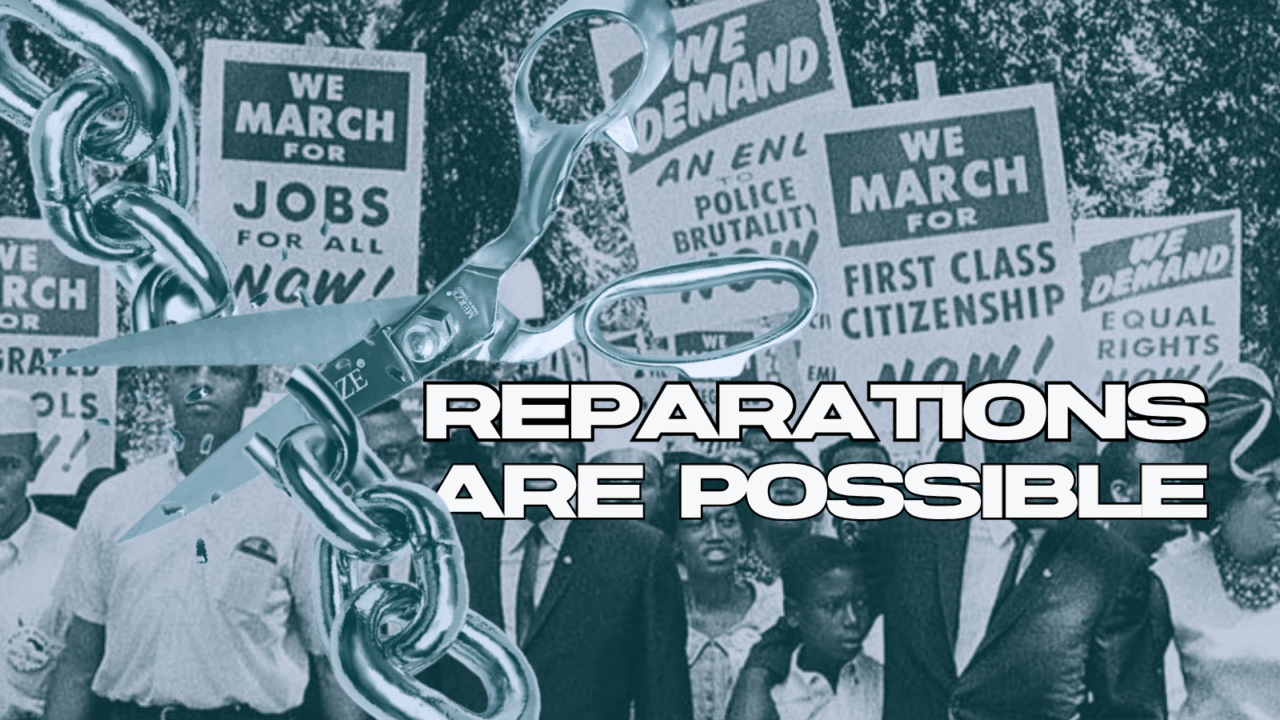
Every critic of reparations should know that it’s already been done.
Back in 1862, America gave reparations, but they were given to the wrong people. President Lincoln signed the District of Columbia Compensated Emancipation Action Law, which offered reparations to slave owners, instead of those enslaved. $300 per person freed, the equivalent of almost $10,000 per enslaved person today. Shockingly, or maybe not so shockingly given this country’s long and appalling history of white supremacy, nothing was offered to those who actually suffered the harm of slavery. Fast forward to today, and that same injustice continues. Mr. Trump, far from repairing the harms of the past, recently attempted to secure a $1.8 billion fund to pay himself and his cronies reparations for the so-called harm they experienced at the hands of the Department of Justice.
At Equity and Transformation, we are deep in our push for Drug War Reparations in Illinois. As proposed, these reparations would take the form of a guaranteed income program known as the Illinois Future Fund. In our work to make these reparations a reality, several things have become clear, and at the top of the list is one important thing: we can win.
Not only can we win, but the time is now.
We know when, where, and what harm has been done to us as a people. The studies have been done, and the research has been compiled. California, Illinois, and other states have already committed to statewide reparations commissions or acts, or have passed reparations-based policies. Those who are against it want us to believe that it’s a far-fetched dream, possible only in our imagination or in some distant, ideal future. But we know different. We know that we can get what is owed to us. Akin to anything worthwhile, reaching success will not be easy, but it is essential for the future our people deserve. Here’s how organizers like us can make it happen.
Through true grassroots organizing, a firm commitment to holding the line, and the ability to build alternatives that become permanent solutions in our communities, we can develop and win a plan for true reparations. Permanent solutions like the Clean Slate Act, which was recently passed in Illinois. This bill ensures automatic clearance of someone’s record after their time is served. This policy impacts millions of Illinoisians. The process for expungement and sealing of records is a complicated one, but the automatic sealing of records directly saves millions of impacted folks from the collateral consequences that come with incarceration.
We’ve watched this current federal administration wield power in a way unique to itself, smashing through the checks and balances we thought were there to protect US citizens. With the Voting Rights Act and every inch of progress made since the Civil Rights Movement on the chopping block, it is also clear we need to push for permanent solutions. Solutions that cannot be torn down by a shifting political climate. One such solution is policy that codifies and ensures comprehensive reparations that cover the five pillars defined by the United Nations: Restitution, Rehabilitation, Compensation, Satisfaction, and a Guarantee of Non-Repetition. But what those pillars will look like for each harm must be identified by the people. The top-down solutions coming from the movement must end. If the solutions aren’t coming from the communities we serve, then we are not doing our due diligence as organizers.
What does it look like to get solutions from the people? Simple: talk to folks, not at them. People are tired of being told what they need to do or learn to be liberated. Our people living in harm know what they need to be whole. Don’t hold a panel with alleged experts on the community and its needs, hold a People’s Movement Assembly and invite folks to give input on their future and create the vision together. Just last month in Chicago, hundreds of folks gathered to envision a future when reparations are met. We discussed what the communities would look like and feel like if our needs were met. Together, we worked toward envisioning policy together. What would a permanent guaranteed income mean for our communities, as a form of reparations? Others talked around trauma response in the community and what true repair looks like in times of crisis. The folks I met that day reminded me of one critical lesson for organizers: If your work in reparations finds you in the same spaces with the same folks, it’s time to switch it up. When in this work, it is crucial to always ask yourself: Who do I serve?
(Want to hold your own People’s Assembly? Check out this guide from Movement for Black Lives to learn how!)
At Equity and Transformation, we serve system-impacted Black informal workers. So every decision we make, every campaign we drive, and every area we focus on is driven by Black informal workers in the informal economy. Our members vote on which campaigns we champion, who is in leadership, and, ultimately, what direction our organization takes. When there is conflict, we practice restorative justice. We are in community, practicing what we preach and building alternatives that last. People care about their communities and want better for themselves and each other. When given the space to dream and the opportunity to imagine with one another, the brilliance in our communities shines bright. The innovation is there, we just need the containers to dream and the resources to make the dreams a reality.
Pushing for reparations is not for the weak. This is not a flashy, sexy lane to be organizing in, even amongst those who consider themselves amongst the progressive left. To do this work, you have to be ready to hold the line. Ready to walk into rooms where they’ll say repair, rehabilitation, and all the words that make reparations, but are hesitant, or refuse to call it what it is. Reparations. We have to hold the line. We can’t let people say they care about Black people or believe in our communities if they aren’t willing to speak this plain truth. America must atone for its oldest sin. Until that is done, this nation will continue to build on a faulty foundation.
It’s time for more organizers to take up the fight for reparations in your communities. We can make repair a reality, especially when we work together and let the people’s vision drive us. The idea that reparations are not possible is a lie. The idea that the time is too far gone, or that there is no way to fund or administer what is owed, is faulty logic administered by those who are not fit for this work. We deserve better, and we will win.