Listen to the interview here.
This interview has been edited for length and clarity.
OPENING
ADEM SENGAL
Continuing from the first part of this conversation with Ron and Candace about how immigrant, poor, and marginalized communities have always led the fight against corporate power by creating community-controlled alternatives. Now, we’re going to be zooming in on how the fight against corporate power is playing out today in two areas.
Our next two guests are Trinity Tran and Sean Gonsalves, two people on the front lines of the fight for public banking and public broadband. As banking and broadband are essential infrastructure in the modern economy, we’ll discuss how these industries consolidated, who they’ve excluded, and how communities are winning public control today.
COMING INTO THE FIGHT AGAINST CORPORATE POWER & CONTROL
ADEM SENGAL
Thank you both for joining us. Trinity, we’re going to start with you. You are currently the co-founder, executive director, and the lead organizer of the California Public Banking Alliance and Public Bank LA. You’ve been a leader in the fight for public banking in California and nationally for the last eight years.
But I want to know first, how did you get involved in this work for public banking?
TRINITY TRAN
Thank you. I don’t really see this as work. I see it’s kind of been like a natural calling that I came into. And I didn’t start this as either a banker or someone with even a finance background. I came to this through our divestment work, protest, and really kind of a strong conviction that change can happen from the bottom up and that ordinary people really can do big things and things that seem impossible. For as long as I can remember, I’ve had this kind of embedded sense of duty to help. I was raised by an immigrant single mother, and that really gave me kind of a sense of how power and money shapes things and whose lives are protected, whose lives are sheltered. And then on the other side, who is vulnerable and exposed to the system? So growing up, I really saw how fragile life becomes when you have less access.
About a decade ago or so, I went through this period of awakening that made the urgency of the moment really impossible to ignore. And I didn’t know exactly what change would look like, but I knew that I had to figure out how to build the courage to start that journey. So there’s an old adage that’s always stuck with me, and that’s, “why see if you cannot do?” It’s that it’s not enough just to be aware of an injustice. We can’t just stay stuck in analysis mode, where ideas get stuck in silos and never touch the real world. And that’s what led me to start a group called a grassroots group called Revolution LA. I wanted to create a grassroots space where justice-minded folks could come together and vent about the system and figure out what’s wrong and figure out how to organize at a local level to be able to change the system.
We met in coffee shops in Koreatown across LA, in church basements, and out of those conversations came our thirteen-point agenda that really named the systems that we needed to transform. So public ownership of banks was number two on that list, right after dismantling the military industrial complex. Even then, we understood that if finance is captured by Wall Street, everything else that we care about essentially runs uphill from that. So banking and finance essentially shapes the limits of what’s possible elsewhere.
During the first Trump administration, our local organizing kind of took on new energy. And we knew that we had to kind of channel that into something productive. In 2017, we launched Divest LA, a grassroots organization, and that was part of a wave of action happening at that time across the nation where local organizers and activists were in solidarity with Standing Rock, where indigenous groups led by indigenous leaders were mobilizing at the reservation in North Dakota to take a stand against the Dakota Access Pipeline (DAPL). The No DAPL protests were really targeting the big banks that were poisoning the water supply, destroying their land, and harming the indigenous community. So out of those conversations came this really powerful idea that you can’t build pipelines if you don’t have funding. That then led to our realization that we need to cut ties with the big banks that are financing these oil pipelines. And that was a moment of clarity, that systemic change begins with redirecting the flow of money. To build anything in this world, money is essential. And so part of transforming this world requires, in large part, for us to be able to take control of the money supply.
So in 2017, Seattle council member Kshama Sawant led the first municipal divestment vote that moved about $3 billion out of Wells Fargo. And we looked at LA, and we said, Wells Fargo is one of the main financiers of Los Angeles. By having our public funds sit in Wells Fargo, we’re essentially complicit to their illegal foreclosures on working families, targeting people of color, financial fraud, and the wars and oil pipelines they’re financing globally. By virtue of our public funds sitting in a bank like Wells Fargo, we felt like we had the moral and ethical duty to move our money into an institution that would be socially and environmentally responsive to our needs.
So we led a grassroots movement and in nine months we were able to succeed in divesting the city of LA from about $40 million in holdings. And then that pushed the city to then unanimously approve a motion that disqualified them (Wells Fargo) from issuing an RFP (Request for Proposal) for the city’s commercial banking services because they had a substandard Community Reinvestment Act rating that year. So on a technicality. And that was a really incredible fight because that was a grassroots, unfunded volunteer-led movement that was packing committee rooms and general council meetings and city hall and doing public comment and protesting at Wells Fargo. It was really unifying street action with legislative action. And that was kind of the start of the public banking movement, realizing that if we move our money out of Wells, it would just go to another large, predatory, extractive Wall Street bank.
And that led to our Measure B campaign here in Los Angeles, which was the first voter referendum in the U.S. for a city to take the first steps towards creating a public bank. That was unfunded again andvolunteer-led. We had four months to organize because the council president at that time kind of rushed it on the ballot, and it didn’t pass. But in four months, we were able to gain 44% of the vote and 430,000 people voting to support us. So we knew that a seed was planted.
MAKING SEEMINGLY MUNDANE CORPORATE POWER ISSUES RELEVANT & ENGAGING USING STRATEGIC STORYTELLING
ADEM SENGAL
Sean, you are an associate director for communications at the Institute for Local Self-Reliance (ILSR), leading the Community Broadband Networks Initiative. You come to this work after years as an award-winning reporter, an editor at the Cape Cod Times, and a nationally syndicated columnist in twenty-two papers across the country. So, needless to say, you are an incredible storyteller. With your background of decades in local reporting, what is the importance of storytelling and the work you do to get people to care about public broadband?
SEAN GONSALVES
It’s a good question. For me, storytelling is really the bridge between abstract policy and real-world impact. I did local news reporting, editing, writing columns, and whatnot. And it taught me that most people don’t really connect with things like broadband because of gigabits or acronyms or funding charts. They connect when they see themselves and their neighbors in it and how all of that connects to their future. So when we at ILSR talk about community driven, locally controlled broadband, what we’re really talking about are addressing things like children having to do homework in parking lots or older Americans and people with chronic illnesses being cut off from telehealth, small businesses not being able to fully participate in the modern digital economy, tribal communities fighting to preserve their sovereignty, but also looking to harness the technologies they need to boost economic prospects for themselves in a digital age.
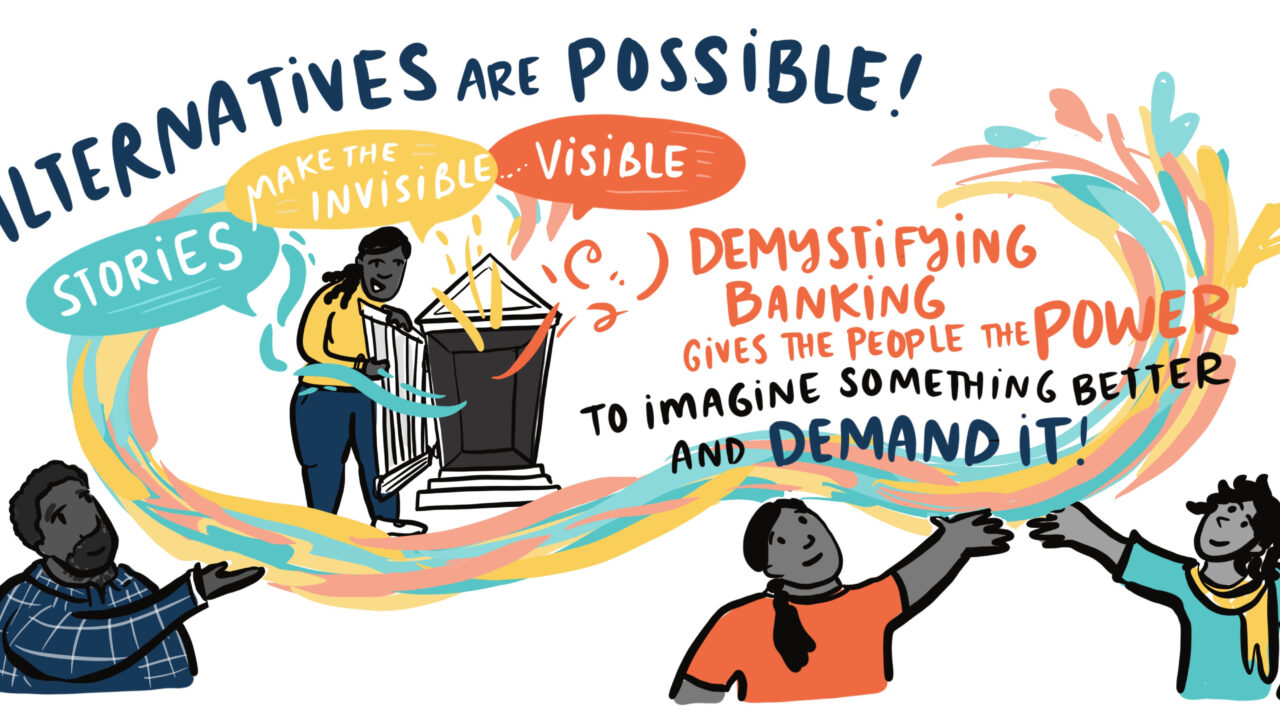
So for me, this is why storytelling is important. It takes broadband out of the realm of infrastructure and puts it where it belongs, in the realm where real human stakes are involved. To my way of thinking, good stories really make the invisible visible. They reveal who benefits from the status quo and who’s harmed by it. So good stories help communities not just to understand the system, but to imagine something better and to demand it. So the work really isn’t just about, for us, documenting fiber builds or analyzing policy alone. We also try to lift up the lived experiences of people who’ve been underserved for decades to show that community broadband isn’t just some academic exercise. It’s really the most practical, durable way to build digital opportunities from the ground up. So from my point of view, storytelling turns that truth into momentum.
ADEM SENGAL
Yeah, and then from the ground up is the truth of the work that both of you do. In both areas, they are essential infrastructure. These are services that everyone needs to engage in the modern economy: banking and broadband.
So it seems like it’s really important to make that connection to people. How do you get people excited about that basic infrastructure, like broadband and banking? What is resonating and connecting with the people that you’re talking to and meeting with? Trinity, do you want to start us off with that?
TRINITY TRAN
I think finance can feel really cold and distant and a little wonky to a lot of people. It’s designed to feel complicated. A big part of our work is really breaking it down and simplifying it and demystifying finance because nobody wakes up excited about a banking feasibility study or a public bank financial model. We have to figure out a way to talk about finance and banking, where it connects to people’s lives. And from there, we can show how systems underneath, like banking, like public finance, are really all interconnected, and it will either support people and improve their lives or quietly disinvest in their communities and set them back.
With public banking, our communication translates finance into human terms, and it turns human stories into policy solutions. So when we’re talking to policymakers, we speak in the language that moves votes, that actually moves policies. So we talk in terms of fiscal sense and numbers. We talk about investment and debt savings and leverage ratios, but with the public, we flip that lens a bit. We’re opening with overdraft fees, payday loans, and small businesses that can’t get a loan from a bank that’s literally on their block. We talk about neighborhoods that are stuck in permanent disinvestment, and then we connect the dots. The same way that banks drain funds and wealth from working families with junk fees and other sorts of predatory products, similarly, they drain our city budgets with interest, fees, and debt service. So then public banking becomes a tool to kind of reverse that flow. So it’s a practical tool for cities and states to be able to leverage their own balance sheet, their own resources, so that we can fund community priorities.
And different stories, I think, resonate with different people. So we don’t really use a one-size-fits-all script. For small businesses, it’s about stability and partnership and how a public bank will strengthen community lenders, community banks, credit unions, CDFIs (Community Development Financial Institutions), so then they can, in turn, support local entrepreneurs, small micro entrepreneurs, street vendors. For working families, it’s relief from exploitation. CalAccount is our other initiative, and that’s a zero-cost, zero-fee, zero-penalty, basic bank account that all Californians will be able to opt into to be able to open up a basic bank account. So that ends the overdraft traps and the junk fees, and that provides banking as a public utility. So that’s one way that we frame our public banking work for working families. And for communities of color, it’s about financial justice, it’s about redirecting our public dollars into neighborhoods that have been sidelined and ignored by big banks.
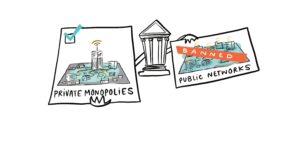
And so right now, our financial system functions on extraction. On one side, you have a private model where profit and resources are drained out of our communities and are not being used to serve the people. And so on the other side, we’re building a public model where interest creates profit that belongs to the community. So if you zoom out, almost every harmful system we’re fighting kind of touches that same nerve, which is money. At the end of the day, whatever initiative you’re fighting for, it comes down to one very core question, which is, how do you pay for it? And so what’s unique about public banking is our ability to break silos where affordable housing advocates usually are just in the affordable housing space or environmental justice and small businesses in their space. But with public banking, we see it as a cornerstone of the progressive movement because of the possibilities around funding all of our priorities.
ADEM SENGAL
Absolutely. Sean, can you tell us what’s resonating with people around public broadband?
SEAN GONSALVES
Yeah. So when you were asking what gets people excited about basic infrastructure, the first thought that came to mind is that you don’t. You don’t get people excited about infrastructure. I mean, really, people generally don’t get excited about, say, the mechanics of engineering. Unless you’re an engineer. Then you really geek out on that kind of thing. But most people only really think about infrastructure, I think, when something goes wrong: giant potholes on major roads, the power goes out, the water’s not safe to drink, a bridge collapses, stuff like that. But when we at ILSR talk about broadband infrastructure — I mean, yes, we talk about the technologies involved and the other more technical aspects — really what we’re talking about is the intersection between internet access and people’s ability to fully participate in modern society, from employment, education, commerce, or healthcare.
I mean, just about every aspect of our lives today is connected to internet access in some way, shape, or form. And yet there’s tens of millions of people in this country who do not have access to reliable high-speed internet. It’s really an embarrassing reality that was made plain during the onset of the COVID pandemic. That was really a tipping point in terms of understanding something broadly, I think, in society, that only the digital equity advocates were talking about the digital divide until the pandemic, for the most part. But even with that, it’s not the infrastructure per se that resonates with people, or what’s the difference between a megabit and a gigabit, and that kind of stuff. It’s those fundamental access issues.
ADEM SENGAL
Right. And I also want to just acknowledge these are some of the most hated companies, the internet service providers and the banks. And in Trinity’s example, the divest movement against the banks became a rallying point and a place for people to start identifying who’s to blame for what’s not working and what’s benefiting only a few people. It comes after the housing crisis, where banks targeted, stole from, and exploited people of color in their lending practices, and then they got bailed out while people lost their homes. Housing costs have gone up directly as a result, and we see the constant harm in where they invest and how they under-serve communities of color. For internet service providers, they’re hated because people are paying more and more for low-quality service and have no real alternatives because they’ve split up the map to create local monopolies.
The system is really stacked against people because these companies can dictate the rules. So how much does narrative play into your work? Saying that this story that we’re seeing of this consolidation and the harms that these companies create, how much does that influence and shape the work that you do?
SEAN GONSALVES
Well, I mean, you’re hitting on something that I think I’ve touched on a bit already, which is a public education piece of it and shaping that narrative and telling those stories that really embed in people’s minds that alternatives are possible. The very idea that local communities can build their own last-mile networks, just like they build roads or bike paths or sidewalks or water systems is an idea that doesn’t really cross most folks’ minds, I think. Also, in many ways, people by and large think that only the big telecom companies can build something so technologically complex as an internet network. But in reality, the technology isn’t the problem. How to build and operate fiber networks is well understood. It’s really an issue of power, poverty, and political will. And I mean, by the way, most infrastructure that cities and towns build all the time are far more expensive and complex than building, say, a last-mile fiber network, but there are political challenges.
You’re fighting against big cable and big telecoms powerful lobby. I mean, these monopolies do not want competition. And so we see, for example, frequently these AstroTurf campaigns where they’re trying to convince people that municipal broadband or public broadband is this financial burden to taxpayers, that it fails, and all of that kind of stuff. And then in some states, they’ve actually ghostwritten laws that either outright ban municipal broadband or erect these enormous barriers to public broadband or community broadband. In fact, there are sixteen states in the nation right now that have laws on the books that either outright ban municipal broadband or, again, erect these barriers to make it all but impossible to pursue.
But as you alluded to a moment ago, you don’t really have to convince folks that there’s a problem, that the broadband market is broken. They know it in their bones. And like you pointed out earlier, when you look at surveys year after year of the most hated companies in America, you’re going to see your AT&Ts and your Comcasts and your Verizons pretty close to the top year after year after year. And so a lot of this is — at least the aspect of the work that I’m most focused on, especially being a communications person — telling these stories of these growing number of communities. The first municipal broadband network is the municipal network in Glasgow, Kentucky. They built their own network in 1994. They call it Glasgow EPB (Electric Plant Board) Fiber, not to be confused with EPB Fiber in Chattanooga, which is like the most well-known broadband system in the nation. But like most cities with municipal broadband networks, Glasgow already had a city-owned electric utility.
But unlike a lot of cities with municipal utilities or municipally owned electric or water systems, Glasgow really wanted to build a cable network because the service that they were getting from that regional provider there sucked, to put it bluntly. But since Glasgow built that first citywide municipal network back in 1994, hundreds of communities across the country have built and operate their own networks. So the bulk of our work at ILSR’s Community Broadband Networks Initiative is really about documenting the birth and ongoing development of what has become part of this broader digital equity movement.
So we’re fundamentally concerned about the digital divide and the chasm between the digital haves and the digital have-nots. But since 1994, when that first municipal broadband network was established, and 2020, there were 400 municipal networks built across the country. Between January of 2021 and January of 2024, forty-seven new municipal networks came online. This past year, we’ve seen eight new municipal networks come online. Now, none of that includes the hundreds of community broadband networks like member-owned electric cooperatives that are deploying fiber networks in rural communities all across the nation, and also the eighty or so tribal networks in operation. So all told, there’s about 450 municipal networks across the nation with dozens more in the planning stages. So interest in community broadband is really at an all-time high, even as there’s this work to be done about holding up these models that show that there are alternatives that exist and that are succeeding and really drastically changing the economic prospects and quality of life in many instances of communities.
BUILDING STRONG COALITIONS & HARNESSING THEIR POTENTIAL TO CURB CORPORATE POWER
ADEM SENGAL
Yeah. Trinity, I want to talk about the coalitions that y’all are building, both in the examples of broadband and in banking. So it seems like the way that you did that was to connect the struggles of what people are experiencing to other struggles like education equity, healthcare access, affordable housing, labor practices, and more. And that’s allowed you to really build a lot of power.
What has that transformation looked like? Sean, you talked about how COVID was really a point where people started to care more about it. Trinity, the divestment movement really helped bring people into that. But connecting to all of these struggles, making it a cornerstone, how has it changed what feels possible?
TRINITY TRAN
After the Measure B and divestment campaign in Los Angeles, we realized that there was a lot of energy and momentum and interest around public banking. And so we leveraged that energy into a statewide alliance. This movement didn’t start in a policy shop or a think tank. It really started on the ground with people who were already in the middle of fights over affordable housing, climate, and basic economic survival. So for public banking in California, our base grew out of our local divestment work and economic justice campaigns in Los Angeles, Oakland, San Francisco, Santa Rosa, and Alameda County. Activists and organizers were already pushing their cities to pull their money out of the same Wall Street banks funding the pipelines, private prisons, foreclosures, and displacement. And so we kind of see ourselves as what I’ve called the spiritual successor of the Occupy Movement.
It wasn’t just visceral anger and hatred against the banks. It was about being able to channel all of that energy and that anger into a real, viable solution. And so we aggregated all of our organizing resources because remember again, we had unfunded grassroots organizers organizing with Gmail accounts. So we had to be able to be smart and be strategic about connecting, building our alliances, and leveraging that into political power. We were able to form a statewide citizens lobbying group. When we moved the California Public Banking Act through the legislature, we were able to have constituents hit key Senate and assembly districts all across the state.
And so that’s a big part of being able to organize well, being able to synchronize people power with political power so that you can build the force that it takes to be able to create laws and create legal frameworks to move something like public banking. It’s not just about screaming into a megaphone on the sidelines. It’s important to have visibility and to have energy and movement on the streets, but you also need to be able to sit down and have a conversation and understand banking and finance. That meant, for us, spending our weekends reading through banking contracts and really understanding the language so that we can translate complex banking and finance language into ways that would really be able to capture people’s interest and imagination around the possibilities of what it looks like when we’re able to reroute our public funds back into our community.
The next chapter is really turning public banking as a movement from policy into practice. That means building a network of socially environmentally responsible public banks across the state and helping California cities move beyond the support of the idea, into actually committing funds to get the public bank feasibility studies and business plans and financial models so that we, building out the details of how these banks will work and be economically viable for our communities.
ADEM SENGAL
Yeah. And Sean, how have coalitions played a role in expanding what’s possible with public broadband?
SEAN GONSALVES
Coalition building and coalition work is essential. It’s fundamental. That human network is what pushes the needle. In this particular space, people who are really concerned about internet access issues had the advantage initially of the bipartisan infrastructure law, the IIJA (Infrastructure Investment and Jobs Act). [That law] established a number of federal programs, but one of them was the Digital Equity Act, which was several billion dollars to fund various initiatives that were doing coalition work locally, regionally, within the state to really work on infrastructure challenges that have to do with whether physical networks in certain places enable high-speed internet. So for example, in the IIJA they established the Affordable Connectivity Program (ACP), which was a program that gave a $30 per month discount, $75 per month discount if you look at tribal lands to pay for internet service because places where the infrastructure exists, services exist, affordability remains the big barrier, which you would expect in a system that is a monopoly. That fund, the ACP, ran out of money at the end of May 2024.
So that digital inclusion world that we’re in is in a lot of disarray and has had to lean more heavily, of course, on relationships with nonprofits, coalitions, and some of those things. And we personally are involved with a number of coalitions in South Texas, in California with Digital Equity LA, CADE, which is the California Alliance for Digital Equity. We’ve partnered with Methodist Healthcare Industries in South Texas. We’ve also been very involved in tribal broadband bootcamps, which are really about tribes that either own their own network or are in the process of building their own networks, a place where they’re coming together and learning the nuts and bolts of building and operating their own networks. But those relationships and coalitions are just fundamental to the work. I mean, it can’t be overstated.
CHALLENGES AHEAD FOR DELIVERING ON THE PROMISE OF PUBLIC INFRASTRUCTURE IN BANKING & DIGITAL ACCESS
ADEM SENGAL
Yeah, and when we have those coalitions, we’ve seen really big wins too. Trinity, you were referencing this, but we’ve seen wins in California for public banking. The organizing work that you’ve done in California has led to really major legislative wins. What are the challenges you have ahead to deliver on the promise of public banking?
TRINITY TRAN
So the biggest challenge is implementation. Under the California Public Banking Act, which was signed in 2019, the regulations weren’t finalized until 2022. But since then, we have multiple local governments in various stages of producing feasibility studies and finalizing their business plans before they can apply for public bank charters. In theory, that sounds like paperwork, but in practice, that’s where the crux of a public bank gets decided, like what’s the bank’s real mandate? What’s the mission, the mandate of the bank? Who sits on the board? How do you make sure that the governance is going to be equitable and accountable to the people?
And also, we need to be realistic about the fact that these banks are going to have to be approved by regulators. So it can’t be stacked with just activists. You have to have bankers and finance experts running these banks. So being able to balance that with community voices and making sure that housing and small business and community lenders and people of color and climate folks are represented in how the lending and investment priorities end up penciling out. So we know that if we leave that phase to just finance bureaucrats and city attorneys, things are either going to move very slowly or they’re going to stall. And that’s why it requires consistent public pressure, consistent constituent support to be able to get legislators to move, especially when you’re talking about banking and finance.
So it requires a lot of handholding to get folks to understand that it’s safe and that it’s viable. It’s not some just wonky abstract policy experiment. There’s an existing model in the United States, the Bank of North Dakota. It’s a hundred-year-old public bank that withstood the economic crash of ’08. It returns hundreds of millions back into its state’s general fund year after year. So this isn’t just a progressive policy idea. This is a real, practical tool that has been battle-tested in a red state.
The second is also capitalization. How do you pay for the thing that’s supposed to help fund everything else? So at the end day, we have to figure out whether it’s moving existing funds that are idle, whether we’re issuing bonds, the financial models of how this bank is going to be, where the startup and capitalization costs come from, and then working through the finance models so that it can be profitable and support communities and be sustainable. Pushing through those models and figuring out where the funding actually comes from to support these banks is going to be a big challenge for the movement.
And I think another challenge is really public understanding. This is really still emerging public policy. Traditionally, it’s been more progressive legislators and representatives like Rashida Talib and AOC backing. And then recently we held a national webinar with Senator Elizabeth Warren. And so now we’re starting to see the wider spectrum of Democrats and politicians kind of get behind this idea. And because this has been a grassroots-led movement, our challenge is really being able to communicate that it’s not just some wonky experimental idea that public banking is viable and it has legs.
But I think part of that kind of referencing what you were talking about earlier about communications and framing is that we don’t need to convince people that Wall Street banks are bad. People understand on an intuitive level that big banks are predatory and extractive. So it’s really about simply communicating the idea that, if we created a tool at the local level we can reroute public funds so that we can keep it here at home and do more with it.
I think another challenge is risk aversion because when you talk about banking and finance, again, this is a 400-year-old, very entrenched institution. And so one of the challenges that the movement is working through is being able to really work through a phased approach with elected officials and policymakers. And I’ll point to our CalAccount program, for instance. That was our bill that was passed by the legislature, signed by the governor in 2021, to create a two-year process where town halls and committee meetings were held through a commission that was led by the state’s treasurer. Through those conversations, we were able to bring workers from SEIU California and fast food workers talking about the real impact of predatory and payday lenders and cash checkers, stories where working families had to take a bus for two hours only to get 10% taken out of a $100 paycheck. So those stories really helped build the political will for the state’s treasurers and other policy makers to get comfortable with the idea and get behind the idea. So a phased approach is really important when you’re talking about big, transformative, revolutionary ideas. Politicians have to see that their constituencies support it, stand behind it, there’s a base supporting them, and that kind of helps nullify some of the political risk aversion around new ideas.
And the last thing I’ll say is that there is general public skepticism on both sides. So people don’t trust banks at all, and then others don’t trust the government, and both positions are understandable. Right now, our public funds get housed in private Wall Street banks. The decisions of how those funds are used, you have no say in because that’s made behind closed boardroom doors. So a public bank brings transparency to the use of public funds. They’re not run by a city council or by politicians. It’s run by public bankers, and they have a public mandate. So being able to communicate all of that and then show that there’s consistent constituent support, I think, is going to be really important in moving this forward.
ADEM SENGAL
Absolutely. And when you start these fights against these really powerful institutions like the AT&Ts of the world, like the Wells Fargos of the world, when you get these wins for public banking and public broadband, what are the concerns and pushback that you have received from the really entrenched corporate interests? With those entrenched interests that they have, what’s been the pushback in corporate influence and in them buying politicians or politicians not really being sold by the possibility of an alternative?
SEAN GONSALVES
What you find is a community comes along and they spend several years looking at stuff carefully because you need to have a solid business plan. You need to have done your own homework because look, if this was easy, it would have been done. So you need real local broadband champions. We just recently put out a report about nineteen small towns in Massachusetts that essentially created a movement and now have built the densest collection of municipal fiber networks of anywhere in the country. The report really highlights the struggle that most communities will have to go through. Even when you have a fairly significant chunk of the population who says, “Yeah, let’s move forward, this is a good idea.” But you still have, in many instances, town officials for various reasons who don’t want to get involved.
And so cultivating relationships with local electeds and expecting there to be a campaign can be effective. Of course, when you’re even doing basic things like a community planning stage, which is before they build a network, that public education piece and that constant transparency is vital to inoculating the community, to some of these astroturf campaigns that eventually come along through social media or flyers. You’ll already be familiar with the claims that you hear over and over again, like pointing out an example of a municipality that didn’t have a good plan, and the project blew up. If there’s one particular example, ignoring the hundred other success stories is disingenuous. And when people are aware of that kind of context, it really can inoculate them from some of the ridiculous claims and some of the pushback that you see.
Years ago in Ohio, there was a state representative who went nameless and submitted a bill that tried to ban municipal broadband. And there’s a number of great municipal broadband networks in the state of Ohio that people really love. And so getting that [INAUDIBLE] really was enough to embarrass him and even the governor to throw that thing to the curb. But that wouldn’t be possible without a coalition of people ready to move and be able to shift resources to really beat back some of those attempts.
And then there’s just good old-fashioned work that has to be done in terms of fighting for certain policies. Within the digital equity space, we’ve taken some L’s on the chin the past couple of years, and folks are now getting their bearings and starting to rally certain visions around whether it’s filing legislation in state legislatures that mandates affordability requirements as it relates to internet access. Advocates are pushing for an ACP affordable connectivity 2.0 around universal service reform.
All of that is heavy lifting in the policy realm. That’s where you see a lot of the fights happening now at the same time as this growing awareness that community broadband is changing communities, whether it be in Chattanooga, there’s a number of municipal networks in the Front Range region in Colorado that have been tremendous… and those stories, word is getting out. I mean, it’s sort of a truism to say this, but I’m a big fan of saying if it exists, it’s possible. And so I think, as it relates to banking, I think a significant part of our work is raising the awareness that some of the things that we’re talking about already exist and are already working.
ADEM SENGAL
Trinity, what kind of pushback have you seen? And how have you been able to withstand that kind of pushback?
TRINITY TRAN
Yeah, one of the pushbacks that we’ve seen is that the public sector is inefficient, that the government can’t run a bank. Then you look at the reality that even though we have one public bank in the US, there are 900 public banks globally with over $40 trillion in assets. There are successful models globally. And then, as I mentioned with the Bank of North Dakota, that’s a hundred-year-old bank in the United States and in a red state that is exceptionally stable for a public institution, which has returned over a billion dollars since its founding. So there are real-life models that we can point to.
Another pushback that we hear is that cities, local governments, and states shouldn’t get involved in banking because it’s too risky. And we understand that a public bank is going to have to, at the end of the day, pencil out. So I know there’s a lot of rhetoric in the movement about housing and green energy and small businesses and infrastructure. We know that a public bank’s going to be managed with risks like any other bank. There’s no exception there. It’s going to have to target liquidity risk, credit risk, interest risk. But all of those details and the nuts and bolts of a public bank, that’s what the point of the feasibility study and the business plan is, because it will detail the mission and the mandates of a bank, the governance, the financing structure, the capitalization, the lending models. That is why it’s so important for cities to take that first step to explore what are the possibilities if we created a way for us to cut costs and save money and generate revenue to fund the things that we need.
And then another pushback that we hear is governance. People kind of see a public bank as a slush fund for politicians. And that’s valid, I think, especially in a city like Los Angeles that had some controversy around previous council members. But I think the thing there with governance is that emphasizing that this is going to be run with multiple levels of oversight. So unlike private banks, that have oversight by state and federal government, you have the local governing body that runs the bank. You have state regulators, federal regulators, and then you have constituencies. Because these are public banks, they operate under transparency laws, which means public records laws. So there’s at least full transparency in public records and oversight committees that can help safeguard a public bank against misuse.
THE POSSIBILITIES THAT COME WITH WINNING THE FIGHT FOR PUBLIC INFRASTRUCTURE THAT SERVES OUR INTERESTS
ADEM SENGAL
In the first half of this conversation, we talked a lot about the history of anti-monopoly and anti-corporate power organizing. And one question that I asked them was about how we can be resilient moving forward. And what I hear from both of you is the importance of continued organizing to really show that you still have power in the fight.
And when you have that, you can look to the future. A lot of the work that we do at LibGen is focused on imagining a new future, something that both of you all have talked about. So what I want to do next is I want both of you to imagine some point in the future when you win these fights and deliver public banking and public broadband. What does that transformation mean for all of the people who are getting poor service and actively harmed now in our current systems of commercial banking and internet service provider monopolies? What possibilities can we see when we win?
TRINITY TRAN
Yeah, so with public banking, take CalAccount. It’s about treating basic banking like a public utility. So, in a future where public banking moves from a concept to a political reality to actual institutions and programs, that means people are able to wake up and be able to access their own funds without having to turn to payday lenders and predatory lenders. And it’s a public-private partnership. I think that’s part of the reality of our organizing because with CalAccount, we’re not replacing private institutions from the start. We’re working within the existing infrastructure system to be able to evolve it so that it can support the people.
And I think with municipal banks, we’re not pretending to cut ties with private finance tomorrow. We’re not divesting entirely from Wall Street. The cities are still interacting with capital markets. But it opens up the pathway for us to be able to support community banks, credit unions, and CDFIs and their missions to be able to infuse capital into the community so that they can do more and expand and amplify the work that they’re already doing.
In a world where that’s possible, that opens up so much around public deposit instead of cycling to Wall Street, it comes back into our community so that we can fund affordable housing instead of luxury units that no one can afford. That means we can build buses, and our sidewalks are safe, and our community spaces don’t just disappear once a grant ends, and we have solar panels on the roof. And so, the speculative projects that are designed to extract as much as possible then become long-term investments that are designed to support our communities, the health and well-being of our communities for the long term.
On the state level, a public bank functions like an amplifier. And so the possibilities around a state public bank can do what smaller municipal banks are doing, but at a much larger scale. So that means the possibilities around financing large social housing portfolios and regional clean energy projects, community-owned broadband, and climate-resilient infrastructure, which is especially important right now since the Trump administration froze and scaled back the greenhouse gas reduction funds.
This gives us a way to be able to support our communities with permanence, without having to scramble for funding at every budget cycle, without having to cut essential services or furlough workers, or raise taxes to be able to fund the things we need. So for people who have been on the losing end of the system for generations, you’re not paying extra just because you’re poor, you’re undocumented, or you’re living paycheck to paycheck, you’re not being penalized for not having enough money in the bank. That’s for a CalAccount. And for public banking, our neighborhoods are not treated as collateral damage because it doesn’t fit someone else’s business model, because a Wall Street bank isn’t earning enough profit from that. So it’s the power to be able to fund things and not have to depend on private profit-motivated interests.
So in this future, I see residents and union members and community organizations and small business owners all being able to plug into how this new institution works because they also have a say in it because it’s a publicly owned institution that gives them ability to see the lending and investment priorities of the bank and participate in public meetings to shift the priorities to better serve our community.
And to ground this, public banking isn’t a panacea; it’s not going to erase every injustice out there. We know that. It’s not going to stop greed. It’s not going to end the crisis on its own. But what it does is it changes the underlying rules in a very specific way that money stops being a one-way extraction from our communities, and it starts functioning as this shared public infrastructure that we have some say over. So that’s the transformation I really look to ahead. That in people’s daily lives, who have been ignored and sidelined and exploited by the financial system, that they’ll start feeling something of a shift in how our communities looked.
ADEM SENGAL
I want to be in that future. Sean, what’s possible in the future where we have public broadband?
SEAN GONSALVES
Sometimes when you think about the future in technology, at least for me, you can get all these dystopian nightmares and everything. And I’m not saying that there aren’t some real, super valid concerns about that, but when I think about the future in this space I think about a couple of tangible things. So I’ll put on my sort of techno-utopia hat for a second. I’m saying that these are things that are possible. In that future, you would see things like digital skills training being available for anyone who needs it. It’s amazing to me that in 2025 we passed the Digital Equity Act of 2021, and then this administration cancels an act meant to provide resources and help stand up digital skills training, which is really an extension of workforce training in many ways across the country.
So to me, it’s a future where there’s digital skills training available for anyone who needs it. So they can actually safely use the tools that are emerging or that are here. I think there’d be a lot more open-access networks. These are networks that are publicly owned, locally controlled. But then instead of operating as a retail service provider, they lease that network out to multiple independent internet service providers, which creates — if we’re going to use markets — that competitive market where the people who are using the network are focused on how to win subscribers by offering great deals or great service versus I’m going to try to extract as much wealth out of this community because I have a monopoly control over the entire system infrastructure.
I think in this future, I would see telehealth as being really actually widespread and where it does have the potential of improving health outcomes. And by improving health outcomes, we’re talking about things like reducing unnecessary ER visits, readmissions, you’re able to better manage chronic care in this future. You’re doing two things at once: helping to improve health outcomes and also drastically lowering the cost of healthcare. We did a study that looked at ten rural counties in the Black Belt and were able to quantify and show that if everyone had robust access to affordable, reliable, high speed internet, the savings that could accrue from that far exceed, we’re talking about orders of magnitude, the amount of money that you would need to invest in order to make that a possibility. So, telehealth would be something that would be much more widespread.
There, of course, would be none of these ridiculous barriers that we see in these sixteen different states that have these anti-municipal broadband barriers. We shouldn’t have laws on the books that say essentially you’re not allowed to decide if you want to build fundamental infrastructure for your community and control it and to keep that investment and the revenue being generated from it within your own community.
There would be no such thing as data caps or hidden fees or long-term contracts. And then lastly, I would just mention that there would probably be an ACP 2.0, a program that helps people who can’t afford internet service to afford it. That’s how fundamental it is. I mean, assuming that we’re living in a society that to some degree is still relying on markets to answer some of these questions, there’s probably always going to be a segment of society that’s going to need some form of subsidy to stay connected. So these are some of the things I think of that we would see when we’ve really delivered on what I see as the promise or the vision behind community broadband on a number of fronts.
ADEM SENGAL
Yeah, absolutely. In both of these examples, the transformations possible in housing, workforce, and healthcare, all of these things are so important, and the transformations that you’re talking about would make that possible for so many more families.
CLOSING
ADEM SENGAL
How can folks support or stay informed about your work, or are there any upcoming actions or events you want to highlight?
TRINITY TRAN
So to stay up to date and to keep track of all the exciting movement organizing efforts here in California, check out our website at capublicbanking.org. And on our website and our contact page, we also have all the regionals. If you want to get connected to Los Angeles, San Francisco, or the East Bay efforts, all of our initiatives have their own websites, for example, with Los Angeles publicbankLA.org. We’re also on social media. Follow us on Instagram, Facebook, Twitter, and BlueSky. And our CalAccount website, which you can click on from capublicbanking.org.
SEAN GONSALVES
For us, ilsr.org is our organizational website that is the home to not only our initiative, but the other initiatives that we have, such as a great composting, energy democracy, and independent business initiative. We have a weekly podcast called Community Broadband Bits that the director of our program, Christopher Mitchell, is the host. We do a livestream show called Connect This. And really communitynetworks.org is the best way to access the trove of information that we’ve got on all things broadband and where you really are at the heart of that storytelling that we talked a lot about because for us, that storytelling really keeps us connected to the why and that why is really about building a digital future that’s rooted in community power and not corporate.
ADEM SENGAL
Perfect.