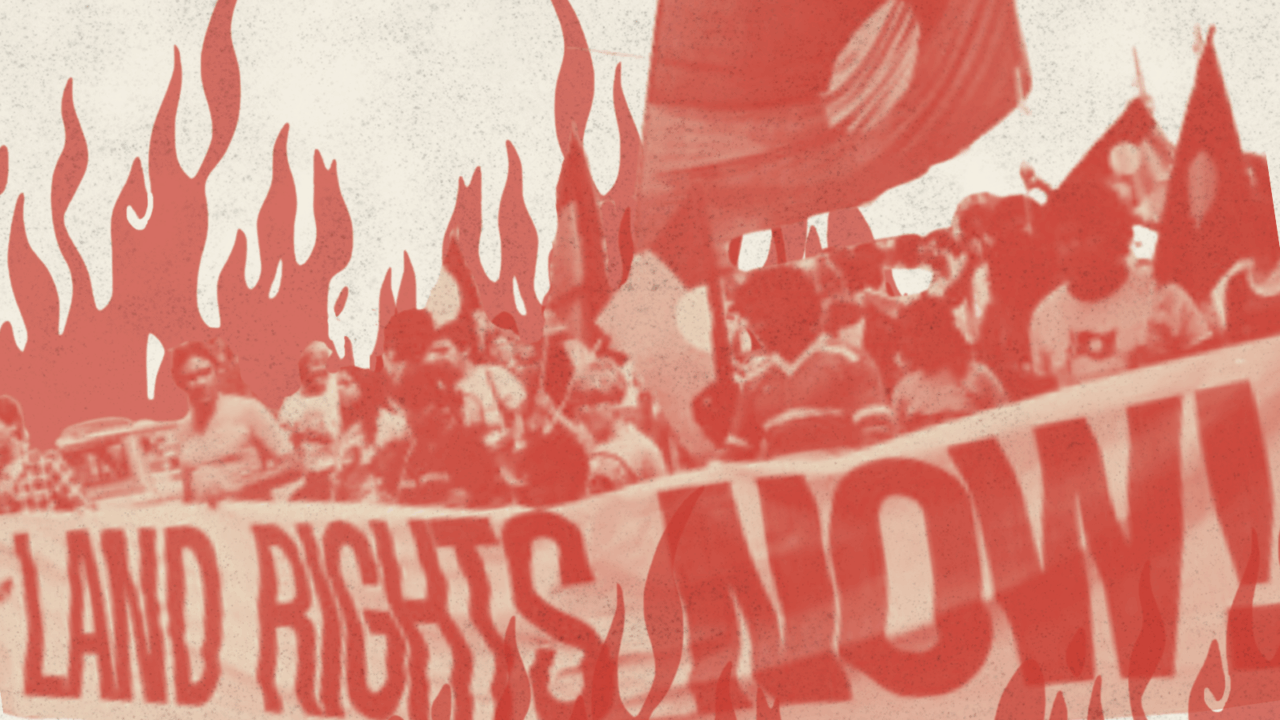
The family policing system and the colonial legacy of the pass system, boarding schools, slave patrols, and immigration policies.
Indigenous, Black, and other communities of color across North America know all too well how quickly civil rights and community safety can be stripped away and violated. Since the Doctrine of Discovery, Black and Indigenous Peoples have experienced state-sanctioned dispossession and subjugation. And in the present political climate, our communities continue to experience high rates of policing, forced displacement, and family separation, with U.S. Immigration and Customs Enforcement (ICE) extending those same tools of state violence into communities that were previously shielded by privilege, proximity to whiteness, and whiteness itself. Today, we see detention centers, deportation, and family separation operate with ever fewer protections, a legacy that will impact generations to come.
Modern border and segregation enforcement across the United States, Canada, and Mexico is not a series of isolated policy developments, but rather, part of a long history of state violence, control, and surveillance. From kidnapping Indigenous children to criminalizing Black political action, to the present targeting of undocumented communities, these policies reinforce systemic inequities by dictating social belonging, daily family life, and who cares for children. All of this affects overall community outcomes.
Scholar Patrick Wolfe reminds us that settler colonialism is “a structure, not an event,” meaning it doesn’t end with initial invasion but persists through ongoing systems of dispossession. In practice, this means state law, institutional policy, and administrative practices continue to treat Indigenous land and life as disposable. Today, Indigenous communities experience forced displacement due to corporate encroachment and environmental degradation, all, as Angela R. Riley and Kristen A. Carpenter explain, under the guise of “economic development, increased military bases on Indigenous lands and beyond.” Settler colonialism shows how historical dispossession, land theft, and environmental violence are parts of the same ongoing governance logic. When we look at borders themselves, we see how this logic was embedded into the very geography of North America. Borders separate the U.S. from Canada and Mexico, dividing Indigenous territories without consent, and affecting Nations like the Haudenosaunee, Wabanaki, Ojibwe, Yaqui, O’Odham, and Apache to this day.
Turtle Island (North America) has been home to Indigenous Nations long before the current colonial era, and are not of the past but are in fact ongoing sovereign Nations, and living communities with their own governance systems, epistemologies, and pedagogies that have thrived and sustained themselves long before the formation of settler states. Recognizing Indigenous sovereignty today means acknowledging that Indigenous Nations continue to assert authority to self-govern, manage their lands, resources, citizens, and affairs. This authority is grounded in culture, food, and data sovereignty, as well as inherent territorial rights, which are essential to their self-determination and the principle of free, prior, and informed consent. Indigenous scholars such as Leanne Betasamosake Simpson emphasize that Indigenous Peoples have long acted as stewards of their territories, sustaining relationships with land since time immemorial. Therefore, reparations and decolonization will require a change to the entire structure, not just capital or land within the current capitalistic structure.
As Eve Tuck and K. Wayne Yang argue, decolonization requires the “repatriation of Indigenous land and life,” meaning that colonial states must confront their own role in colonialism, land dispossession, and genocide, restore Indigenous governance, and allow Indigenous nations to flourish according to their own political, cultural, and ecological systems. Legal doctrines such as the Doctrine of Discovery and Johnson v. M’Intosh (1823) purposely subordinated Indigenous sovereignty to federal authority, justifying territorial division and administrative control. In Canada, the Crown asserted authority over Indigenous lands through similar doctrines embedded in law. Mexico, after independence in 1821, inherited Spanish colonial legal frameworks (e.g., Derecho Indiano) that were adapted into state authority, undermining Indigenous governance and territorial stewardship. Borders have never been neutral lines; they have always been tools used to fracture nations and regulate who could claim land, access mobility, and exercise autonomy.
Mobility has always been tightly controlled within these borders. In Canada, the pass system (late 1800s-1940’s) required Indigenous Peoples to secure written permission from Indian agents to leave their reserves, criminalizing movement beyond reservations. In the United States, Congress passed the General Allotment Act of 1917 (Dawes Act). As a result, Native lands were stolen, and Indigenous nations were cut off from their previous support and survival systems. In Mexico, agrarian land reforms and government consolidation of communal lands limited Indigenous access to traditional territories, setting a precedent for administrative control over Black, Indigenous, people of color, and migrants that we see today.
Similar practices governed Black mobility in the United States. Slave patrols in the 18th century monitored the movement of enslaved people; The Fugitive Slave Act of 1850 criminalized self-emancipation, enabling people to be returned across state lines. After emancipation, Black Codes (1865-1866) and later Jim Crow laws restricted residence, employment, and movement. Vagrancy statutes and convict leasing expanded carceral control, ensuring Black labor and movement remained conditional. These practices show that surveillance and mobility restrictions were about controlling people deemed a threat to racial and economic hierarchies. Because of this, modern scholars and advocates believe reparations must move beyond individual compensation and toward policy changes and systemic transformation that address the generational harms rooted in slavery and discriminatory laws.
Present-day immigration enforcement mirrors these logics. Migrants today must carry visas, asylum documentation, or work permits; the absence of proper documentation deems their presence criminal. ICE uses interior surveillance, detention, and 287(g) programs that partner with local law enforcement officers to perform certain immigration enforcement duties. Due to this encroachment, there have been numerous documented instances of racial profiling and civil rights violations embedding immigration enforcement into everyday policing. Recent audits of unaccompanied children released in files reveal gaps that leave many women and children vulnerable to disappearance. The 2018 “zero tolerance” policy, which separated families at the U.S – Mexico border, made visible how family separation continues as a state strategy under the guise of “border security.”
Often when we discuss borders, policy, the legacy of displacement, and reparations across Turtle Island, child welfare is seen as a secondary issue detached from the conversations around immigration enforcement, surveillance, poverty, and even climate change. Yet it functions as a central mechanism in producing intergenerational cycles of economic disparity and disadvantages, as domestic systems like the U.S regulate, police, and separate Indigenous, Black, and other communities of color. Under the guise of protection, the system has caused lasting adversity into adult lives. Child Welfare practices did not emerge in isolation, but are part of a larger continuum of state-led family separation and surveillance rooted in colonial governance. These interventions determine who is considered fit to parent, while often reproducing the very conditions of instability they claim to address.
To understand the impacts of the family policing system and how it operates, it is necessary to situate it within its historical foundations. Rather than seeing it as a neutral system of care, it is an extension of earlier colonial policies that regulated Black and Indigenous family life through removal and assimilation.
Take the following two statements, separated by 100 years but reflecting the same ideology:
“A great general had said that the only good Indian is a dead Indian…I agreed with the sentiment, but only in this: that all the Indian there is in the race should be dead. Kill the Indian in him and save the man” (Captain R. H. Pratt. Superintendent of the Carlisle Indian Boarding School, 1880s).
“The Indian culture is foreign to me, and I don’t think it is valid” (Adoption Attorney, 1987).
These statements reflect a broader Western ideological framework in which Indigenous identity was seen as something to be eliminated or forcefully assimilated within U.S. child removal systems. Beginning in the late nineteenth century and up through the 1970s, federal and church-run boarding school systems forcibly removed Indigenous children from their families and placed them into colonial settings across the United States and Canada. Within these schools, children were prohibited from speaking their languages, practicing their religions, or engaging in cultural practices, and contact with parents, siblings, and relatives was denied. These systems were designed for violent assimilation, operating under the belief that “the cohesiveness of the Indian family would need to be destroyed.”
When boarding school systems failed to fully eliminate Indigenous identity, assimilationist policies were adapted rather than ended. These colonial policies were carried forward into the Sixties Scoop era (1951-1980) when the Indian Act gave the Canadian government authority over Indigenous child welfare. It sought to assimilate Indigenous children into Western society via adoption into White families while stripping them of their cultures, languages, and communities. Meanwhile, due to the impacts of residential schools and the restrictions on rights, Indigenous nations faced high rates of socio-economic barriers. Survivors of forced removal faced a multitude of challenges and long-term impacts from loss of heritage, cultural identity, severed ties from their families, and Indigenous identities. Together, residential schools and the Sixties Scoop were not just about cultural erasure and disconnection. They were about removing the next generation of land stewards, language carriers, and nationhood, ultimately undermining Indigenous sovereignty and clearing the way for continued land dispossession and resource extraction.
In response to the widespread and ongoing removal of Indigenous children from their families, the Indian Child Welfare Act (ICWA) was enacted in the United States in 1978 to address the disproportionate kidnapping of Indigenous children. At its core, the law prioritized placement within tribal communities, recognizing that culture and kinship ties are essential to Indigenous survival and sovereignty.
In the present day, child welfare State intervention into families does not occur in isolation. Research has shown that child welfare systems disproportionately target Black and Indigenous families with racial reporting, investigation, and removal processes. These interventions are often framed as neglect or parental failure, while masking the role of structural conditions produced by state policies that created economic hardship, housing instability, food insecurity, and limited access to health care. Immigration enforcement is yet another contributing factor in cases of children entering foster care following the kidnapping by ICE and the detention and deportation of their parents. Broader research also estimates that expanded deportation enforcement could lead to tens of thousands of children entering foster care, demonstrating that this is not an isolated issue but a structural outcome and connection of immigration policy.
Beyond entry into care, the system creates a cycle of systemic loss and disappearances, where children in child welfare systems face heightened vulnerability to exploitation, including trafficking, with reports showing that states lose track of thousands of youth placed into child welfare each year. For Indigenous youth, these patterns intersect with long-standing histories of removal and ongoing crisis, where child removal is linked to the Missing and Murdered Indigenous Women, Girls and Two-spirit (MMIWG2S+) crisis and systemic disappearance of Black femicide rates. Together, these realities position child welfare as inseparable from the broader architecture of displacement, surveillance, and family separation rooted in land dispossession, border policies, and the surveillance around Black, Indigenous, and other communities of color. These conditions raise urgent questions about what accountability looks like beyond reformist protections.
To confront these legacies, reparations frameworks must address ongoing displacement, surveillance, and family separation. International frameworks, such as the United Nations Declaration on the Rights of Indigenous Peoples (2007), affirm the rights to self-determination, land, and freedom from forced displacement. The Reimagine Child Safety Coalition also provides a quality example by advancing reparative justice through structural policy changes and practices, such as calling for the end of law enforcement partnerships with social workers and for a guaranteed basic income for families. The goal is to center structural change through restoring family agency while acknowledging the generational trauma caused by systemic policing of families.
Accountability and transitional justice should not be seen only through the lens of policy reform, but must also work alongside and in support of grassroots and community-centered structural transformation rooted in Indigenous Sovereignty, Black Liberation, and migrant justice. Resilience and resistance continue to unite and thrive among Indigenous, Black, and other communities of color, driving anti-colonial efforts surrounding Indigenous data sovereignty, community-led migration advocacy, abolition, and treaty rights protections, offering concrete pathways to challenge state control and restore community autonomy.